The person in charge of the solid waste and chemicals department of the Ministry of Ecology and Environment answered the reporter’s questions on the work plan for the construction of a "waste-free cit

  Recently, the Ministry of Ecology and Environment, together with the Development and Reform Commission, the Ministry of Industry and Information Technology, the Ministry of Finance, the Ministry of Natural Resources, the Ministry of Housing and Urban-Rural Development, the Ministry of Agriculture and Rural Affairs, the Ministry of Commerce, the Ministry of Culture and Tourism, the Health and Wellness Commission, the People’s Bank of China, the State Administration of Taxation, the General Administration of Market Supervision, the Bureau of Statistics, the State Administration of Taxation, China Banking and Insurance Regulatory Commission, the Post Office, and the National Federation of Supply and Marketing Cooperatives, jointly issued the "Waste-Free City" In view of the background, significance, general requirements, main tasks and safeguard measures of the Work Plan, the head of the Solid Waste and Chemicals Department of the Ministry of Ecology and Environment answered the reporter’s questions.
  Q: What is the background of the Work Plan?
  A:The CPC Central Committee and the State Council attached great importance to the prevention and control of solid waste pollution. Since the 18th National Congress of the Communist Party of China, the CPC Central Committee with the Supreme Leader as the core has placed ecological civilization construction and ecological environment protection in a prominent position in governing the country, and paid unprecedented attention to the prevention and control of solid waste pollution. General Secretary of the Supreme Leader has repeatedly given relevant important instructions, presided over meetings to study and deploy the reform of the management system for solid waste import, the classification of domestic waste, and the treatment of plastic pollution, and personally promoted the relevant reform process.
  In order to explore the establishment of a long-term system and mechanism with low solid waste production intensity, high recycling level, less landfill disposal and less environmental risk, and promote the modernization of the governance system and governance capacity in the field of solid waste, in early 2018, the Central Committee for Deep Reform included the pilot work of "Waste-free City" in its annual work points; In December of the same year, the General Office of the State Council issued the "Pilot Work Plan for the Construction of a Waste-free City", and the pilot work for the construction of a waste-free city was officially launched. After more than two years of exploration, the pilot work has achieved the expected results.
  In November, 2021, "Opinions of the State Council, the Central Committee of the Communist Party of China on Deepening the Fight against Pollution" clearly proposed to steadily promote the construction of a "waste-free city". In order to implement the decision-making arrangements of the CPC Central Committee and the State Council and guide all localities to do a good job in building a "waste-free city", the Ministry of Ecology and Environment, together with the Development and Reform Commission and other 17 departments and units, formulated the Work Plan.
  Q: What achievements have been made in the pilot work in the early stage of building a "waste-free city"?
  A:
  At the same time, through the pilot project of "waste-free city" construction, we have built a set of index system, solved a number of shortcomings and weaknesses, and formed a number of replicable promotion models, which have accumulated experience and explored the path for the in-depth development of "waste-free city" construction nationwide.
  Q: What is the relationship between the construction of a "waste-free city" and the high-quality development of the city?
  A:"Waste-free city" is an advanced urban management concept. "Waste-free city" does not mean that there is no solid waste, nor does it mean that solid waste can be fully utilized as resources. Instead, it refers to an urban development model that takes the new development concept as the guide, promotes the formation of a green development mode and lifestyle, and continuously promotes the source reduction and resource utilization of solid waste, minimizing the amount of landfill and minimizing the environmental impact of solid waste. During the pilot period, the "11+5" pilot cities will consider solid waste management and economic and social development as a whole, and treat solid waste comprehensively, systematically and at the source from the urban level, so as to promote the cities to make remarkable progress in accelerating the formation of spatial pattern, industrial structure, production mode and lifestyle of resource conservation and environmental protection. The pilot practice shows that the construction of "waste-free city" is helpful to accelerate the transformation of urban green and low carbon, promote the high-quality development of the city and create a high-quality life with high-level protection.
  Q: What is the relationship between the construction of a "waste-free city" and the in-depth fight against pollution?
  A:The construction of a "waste-free city" is an inherent requirement for deepening the battle against pollution. On the one hand, the prevention and control of solid waste pollution itself is an important part of the fight against pollution, and the construction of "waste-free city" is an effective starting point to improve the level of solid waste pollution prevention and control. China’s industry, life, agriculture, construction and other fields produce more than 11 billion tons of solid waste every year, with a larger accumulated stock in history, and the situation of pollution prevention and control is grim. "Opinions of the Central Committee of the Communist Party of China and the State Council on Deepening the Fight against Pollution" puts forward in its main objective that by 2025, the capacity of solid waste control will be significantly enhanced, and puts forward specific requirements for strengthening solid waste pollution control and steadily promoting the construction of a "waste-free city". On the other hand, strengthening solid waste pollution control in an all-round way and building a "waste-free city" are also important manifestations of the change from "resolutely laying a good job" to "deeply laying a good job" in pollution prevention and control. Promoting the tough battle to broaden the scope and extend the depth of governance will not only promote the governance of water, gas and soil pollution, but also help solve the utilization and harmless disposal of final pollutants after governance in these fields.
  Q: What is the relationship between the construction of a "waste-free city" and pollution reduction and carbon reduction?
  A:The prevention and control of solid waste pollution "is connected with pollution reduction at one end and carbon reduction at the other". Practice at home and abroad shows that strengthening solid waste management has obvious effect on reducing carbon. The analysis results of relevant institutions on the data of carbon emission reduction potential of solid waste management in 45 countries and regions around the world show that by improving the whole process management level of four types of solid waste in the fields of industry, agriculture, life and construction, the carbon emission reduction of the corresponding countries can be achieved by 13.7% to 45.2% (average 27.6%); During the "Thirteenth Five-Year Plan" period, compared with the "long process" steelmaking process with natural iron ore as the main raw material, the "short process" steelmaking process in China has reduced carbon dioxide emissions by about 1.38 billion tons. Carrying out the construction of a "waste-free city" and systematically promoting the reduction, recycling and harmlessness of solid waste in the fields of industry, agriculture and life can better promote the fundamental change of energy structure and the optimization and adjustment of industrial structure, transportation structure and land use structure, thus realizing the synergy of pollution reduction and carbon reduction.
  Q: What are the working ideas and objectives of building a "waste-free city" during the Tenth Five-Year Plan period?
  A:During the Tenth Five-Year Plan period, the general idea of expanding and deepening the construction of "waste-free city" is to thoroughly implement the ecological civilization thought of the supreme leader, base on the new development stage, implement the new development concept, build a new development pattern, promote high-quality development, coordinate urban development and solid waste management, adhere to the principle of "three modernizations", focus on the synergy of pollution reduction and carbon reduction, and promote the construction of "waste-free city" in about 100 cities at or above prefecture level.
  To do a good job in the construction of a "waste-free city" during the 14 th Five-Year Plan period, we must adhere to the following principles. First, adhere to systematic planning and integrated promotion, and systematically plan and promote the construction of a "waste-free city" under the major strategic deployment of deepening the battle against pollution and carbon neutrality in peak carbon dioxide emissions. Second, adhere to problem-oriented and goal-oriented, speed up the completion of relevant governance systems and infrastructure shortcomings, and continuously improve the comprehensive management capacity of solid waste. The third is to govern according to law, deepen reform, improve the long-term mechanism for the prevention and control of environmental pollution by solid waste, and deepen the reform of institutional mechanisms. Fourth, adhere to the leadership of the party and government, multi-governance, and build a "waste-free city" construction work pattern with the leadership of the party Committee, the leadership of the government, the participation of enterprises, social organizations and the public.
  The goal of building a "waste-free city" is: by 2025, the intensity of solid waste production in a "waste-free city" will decrease rapidly, the comprehensive utilization level will be significantly improved, the harmless disposal capacity will be effectively guaranteed, the synergistic effect of pollution reduction and carbon reduction will be fully exerted, the management information of solid waste will be basically realized, the concept of "waste-free" will be widely recognized, and the solid waste management system and capacity will be significantly improved.
  Q: What are the main tasks defined in the Work Plan?
  A:Focusing on the key areas and key links of solid waste pollution prevention and control, the Work Plan mainly defines seven tasks.
  The first is to scientifically prepare the implementation plan and strengthen the top-level design guidance. The key point is to strengthen the planning convergence, establish an evaluation system and strengthen the infrastructure guarantee.
  The second is to speed up the green and low-carbon development of industry and reduce the pressure of industrial solid waste disposal. The key point is to accelerate the exploration of the path model of industrial solid waste reduction in key industries and the construction of "waste-free mining areas", "waste-free parks" and "waste-free factories" in combination with the requirements of pollution reduction and carbon reduction in industrial fields.
  The third is to promote green and low-carbon development in agriculture and rural areas and improve the comprehensive utilization level of major agricultural solid wastes. The key point is to develop ecological planting and ecological breeding, establish a development model of agricultural circular economy, and promote the recycling of livestock manure, straw, agricultural film and pesticide packaging.
  The fourth is to promote the formation of a green and low-carbon lifestyle and promote the reduction and recycling of solid waste from domestic sources. The key point is to vigorously advocate the concept of "no waste", carry out garbage sorting in depth, accelerate the construction of a recycling system for waste materials, promote the whole chain treatment of plastic pollution, and promote the source reduction and resource utilization of municipal sludge.
  Fifth, strengthen the whole process management and promote the comprehensive utilization of construction waste. The focus is to vigorously develop energy-saving and low-carbon buildings, comprehensively promote green and low-carbon building materials, and promote the recycling of building materials.
  Sixth, strengthen supervision and utilization of disposal capacity to effectively prevent and control environmental risks of hazardous wastes. The key point is to implement standardized management of hazardous wastes, explore ways to use risks under control, and improve the basic support capacity of centralized disposal.
  Seventh, strengthen the construction of system, technology, market and supervision system, and comprehensively improve the support capacity. The key point is to improve the system of departmental responsibility list, statistics and information disclosure; Strengthen the research, development, application and standard formulation of advanced technologies; Improve the market-oriented mechanism; Strengthen management measures such as informatization and pollution discharge permit.
  Q: How to screen and determine the list of "waste-free cities"?
  A:The municipal people’s government shall, on a voluntary basis, apply to the provincial department of ecology and environment, and the relevant departments at the provincial level shall jointly determine the recommended list and submit it to the Ministry of Ecology and Environment before February 15, 2022. The Ministry of Ecology and Environment, together with relevant departments, shall, according to the recommendation of provinces (municipalities directly under the Central Government), comprehensively consider the basic conditions of cities, work enthusiasm and relevant major strategic arrangements of the state, and determine the list of cities to carry out the construction of "waste-free cities". County-level administrative districts, development zones, etc. with great demonstration significance can be promoted with reference to the construction requirements of "waste-free cities".
  Q: What are the safeguards for building a "waste-free city"?
  A:The construction of "waste-free city" is a systematic project, which needs a long time to make contributions. The first is to strengthen organizational leadership. At the national level and the provincial level, coordination mechanisms will be established respectively to strengthen the organization and guidance of the construction of "waste-free cities" and promote the formation of joint efforts. Relevant cities should establish relevant work leadership systems and mechanisms and improve safeguard measures according to the needs of building a "waste-free city". The second is to strengthen the guarantee of policy funds. Relevant cities should study and improve the policy system, establish and improve diversified investment channels, and ensure the capital demand for the construction of "waste-free cities". The third is to strengthen scientific and technological support. The key point is to strengthen the dominant position of enterprises in innovation, promote the sharing and transformation of technological achievements in solid waste utilization and disposal, and actively carry out international cooperation and technical exchanges. The fourth is to do a good job in propaganda and guidance. It mainly includes increasing publicity, expanding the scope of publicity, innovating publicity methods, strengthening education and training, and encouraging public opinion supervision.
  In addition, the Ministry of Ecology and Environment will systematically sum up the effectiveness and experience with relevant departments, institutionalize effective innovation measures, and strengthen the popularization and application of experience models; The study will give incentives to cities with outstanding achievements in the construction of "waste-free cities" or obvious improvement in the management level of solid waste.


The official map of Tucki M03, the first model of MONA series, was officially released.

A few days ago, Chezhi. com obtained a set of official maps of Tucki M03, the first model of MONA series, from Xpeng Motors. The new car adopted a brand-new design and kept the Tucki brand LOGO. It is reported that the new car will enter the market of 100,000-150,000 yuan in the future, and adopt Tucki’s intelligent driving technology.

The official map of Tucki M03, the first model of MONA series, was officially released.

In terms of appearance, the new car adopts a completely different design from Xpeng Motors. First, the headlights are Y-shaped, which has excellent visual effect and is highly recognizable. In addition, the front face is surrounded by a black front, which adds a lot of sportiness. It is worth mentioning that Tucki M03 still uses Xpeng Motors’s "X" logo, which shows that MONA is not a brand new brand, but a brand new series.

The side design is very simple, using the popular hidden door handle design. It is worth mentioning that there is a very creative small spoiler in the D-pillar area on the side of the new car, and its function has not been revealed yet. In addition, there is no lidar on the roof at present, and a pure vision scheme may be adopted in the future.

The official map of Tucki M03, the first model of MONA series, was officially released.

At the rear of the car, the new car also uses a Y-shaped taillight, which echoes the headlights. The interior of the taillight is also blackened, and the visual effect is good after lighting.

The interior and power system have not been announced yet. According to people familiar with the matter, the battery supplier of Tucki MONA’s first car includes BYD, and its battery life will exceed 500km. For more news about the new car, the car quality network will continue to pay attention to and report.

18 people sneaked into the country from Myanmar! The reason behind it is not simple …

Original Guan Ying Zhang Peng Du Dapeng Fiona Fang

Image source: photo network

This article is the original manuscript of Fiona Fang magazine.

Unauthorized reproduction is prohibited.

He looks unremarkable, dark-skinned, lean, and doesn’t talk much. He looks older than his actual age and doesn’t look like a "post-80 s", but when he talks about acrobatics, he seems to be a different person, and his words suddenly increase, and his eyes suddenly have light.

This is the prosecutor’s first impression of Yan Youlu. Based on this impression, it is really hard to imagine that he is a criminal suspect who illegally organized a number of foreigners to sneak into China for acrobatic training and performance. However, with the in-depth handling of the case, the prosecutor found that the reason why Yan Youlu embarked on the road of crime was not only related to his personal and family, but also to the inheritance of the whole Qiuqiao acrobatics.

The bitter life of acrobatics

In June 2021, the police in Huai ‘an District, Huai ‘an City, Jiangsu Province found that there were some unidentified foreigners in the acrobatic troupe on Yanyou Road, Crystal Village, Boli Town. Soon, Yan Youlu took the initiative to surrender.

Yan Youlu was born in Yan Jiaban, a well-known acrobatic family in Qiuqiao Town, Huai ‘an District. His father and grandfather are both in this line of work. Yan Youlu has been practicing kungfu with his parents since he was five years old, and began to perform on stage at the age of seven. In order to concentrate on practicing kungfu, he dropped out of primary school in the first grade. At that time, Yan Youlu always suffered from acrobatics, regardless of spring, summer, autumn and winter, even if he was physically injured, he persisted.

In an aerial training, Yan Youyou fell from a height of several meters and almost died. Until now, he still has an old scar several centimeters long on his neck.

When Yan Right’s father talked about this son, he couldn’t help but shed tears. He always said that Yan Right was so bitter step by step. Under the strict discipline of the family, Yan Youlu, who is quite talented in acrobatics, has gradually become the pillar of the acrobatic troupe. He performed with the acrobatic troupe all over the country and earned a hard money.

Recalling the previous experience of crisscrossing, Yan Youlu’s face showed a rare smile.

He proudly said: "At that time, most people went out by boat. As soon as the ship landed, we found a place with props on our backs, simply set up a shelf, knocked a few gongs and began to perform. After the end, the audience didn’t want to leave. "

In June 2007, Yan Youlu, who was in his early twenties, officially took over the acrobatic troupe from his father, became the head of the acrobatic troupe, and became the fourth generation of acrobatic descendants in the family. In December 2018, Yan Youlu was named as the acrobatic inheritor of the intangible cultural heritage project in Huai ‘an District.

Go abroad to recruit students.

In 2014, Yan Youlu’s colleague friend said that he had a relative who made a lot of money performing acrobatics in Myanmar. Yan Youlu, who was worried about the survival of the acrobatic industry, was very excited and had a bold idea.

At that time, the domestic acrobatic market was not very prosperous, and it was difficult to recruit acrobatic apprentices and inherit them all over the country. All acrobatic troupes were faced with the dilemma of no successor, and the existing acrobats were older. Especially in recent years, parents pay more attention to culture and education, and are reluctant to send their children to learn acrobatics. It is difficult for acrobatic troupes around the country to recruit young students to inherit their skills. In this way, acrobatic talents will inevitably be cut off, and the acrobatic troupe will face the risk of bankruptcy and dissolution. It is in the face of such a dilemma that Yan Youlu made up his mind to rush to Myanmar.

In August 2014, when Yan Youlu performed for the first time in Myanmar, he was warmly welcomed by the local people and attracted the attention of the local government. The local government quickly sent an invitation letter to Yan Youlu. The local government wants to cultivate local acrobatic talents, and Yan Youlu urgently needs young acrobatic students to support the acrobatic troupe and continue the acrobatic inheritance.

In October 2014, the two sides signed a contract for win-win cooperation. The local government recommended students aged 12 to 16, and Yan Youlu trained them to learn acrobatic skills. Soon, considering the limited local training conditions, Yan Youlu decided to take these students to Qiuqiao’s hometown, but the problem is, how to bring so many students back to China from Myanmar? Due to the special location of the China-Myanmar border, it is close to Yunnan, China, and the practice of smuggling is more common in the local area. Yan Youlu, who has a weak legal consciousness, is lucky.

Since 2016, Yan Youlu has smuggled 18 young students into the mainland from the Yunnan border without going through any entry and exit formalities. He also cooperated with other acrobatic troupes to introduce some students to acrobatic troupes in Shanxi, Henan and Sichuan.

In the investigation stage, Huai ‘an District Procuratorate intervened in the case in advance. In October 2022, the Huai ‘an District Procuratorate filed a public prosecution in the Huai ‘an District Court. With the efforts of the procuratorate, Yan Youlu returned all the illegal income of 500,000 yuan. Considering the circumstances of Yan Youlu’s surrender and voluntary confession and punishment, the prosecutor put forward sentencing suggestions for Yan Youlu to reduce the punishment.

On April 3, 2023, Huai ‘an District Court sentenced the defendant Yan Youlu to three years’ imprisonment, suspended for five years, and fined him 110,000 yuan for organizing others to cross the country (border) and stealing the country (border).

Promote the rescue work of Qiuqiao acrobatics

In handling the case, the dilemma of Qiuqiao acrobatics also attracted the attention of the procuratorate. The prosecutor felt that behind Yan’s right-wing crime, not only was his personal legal consciousness indifferent, but the occurrence of this case also had a certain relationship with the acrobatic inheritance dilemma including Qiuqiao Acrobatics.

Wuqiao in the north and Qiuqiao in the south. Qiuqiao acrobatics was born in the late 19th century. In the 1970s, Qiuqiao Acrobatics was founded and developed by Yan Youlu’s grandfather. From the beginning, a few people pushed carts around the streets, to the peak, Qiuqiao Acrobatics developed more than 50 performance groups, with more than 1,500 employees, more than 200 animals such as horses, tigers and lions, and more than 600 kinds of performances.

Their large-scale acrobatic programs have won many awards, and they have also gone abroad and become famous overseas. In 2008, Qiuqiao Town was named the "Hometown of Folk Culture and Art in China" by the then Ministry of Culture. In September 2014, Huai ‘an District was named "China Acrobatics Town" by China Acrobatics Association.

However, the glory of Qiuqiao acrobatics has finally become a thing of the past, and the development of acrobatic industry is shrinking day by day in the generation of Yan Right.

Especially in recent years, there are fewer opportunities for acrobatic performances. In order to survive, acrobats either start a sideline or change careers. Of course, the most deadly thing is that the acrobatic troupe, including Qiuqiao Acrobatics, has been unable to recruit young apprentices for many years. In September 2022, when the prosecutor came to Qiuqiao for an investigation and visit, the survival of the acrobatic troupe was already very difficult. The difficult problem faced by Yan Youlu Acrobatic Troupe is also the dilemma that the whole Qiuqiao Acrobatics cannot solve.

During the handling of this case, prosecutors have done a lot of extra-case investigation work, and realized that the acrobatic industry is not easy to survive. They also urgently hope that through handling cases and performing their duties, they can unite the efforts of social governance, promote government departments to do good deeds, contribute to the inheritance and development of Qiuqiao Acrobatics, fulfill their procuratorial responsibilities for protecting cultural diversity and cultural brands with local characteristics, and find the optimal solution for handling cases.

On October 14, 2022, Huai ‘an District Procuratorate wrote a research report on the development status of acrobatic industry in this area and submitted it to Huai ‘an District Committee and District Government, which received the attention and instructions of the district party secretary. On October 19, 2022, Huai ‘an District Procuratorate issued a procuratorial proposal to Huai ‘an District Culture, Radio, Film and Tourism Bureau, suggesting that Qiuqiao Acrobatics should be comprehensively counted as soon as possible and a database of Huai ‘an Acrobatics and Acrobatics Culture should be established. Actively seek special assistance funds; Introduce a mechanism to promote Qiuqiao acrobatics into the campus, coordinate tourism resources, and expand the performance opportunities of acrobatic groups; Strengthen support, allocate special funds, build acrobatic training and performance bases, and support and encourage and commend acrobatic innovative talents and projects; Organize and hold Huai ‘an Acrobatic Culture Festival and Acrobatic Performance Competition regularly to enhance the popularity of Qiuqiao Acrobatics.

On October 25, 2022, Huai ‘an District Procuratorate promoted the Propaganda Department of Huai ‘an District Committee to hold a symposium on the inheritance and development of Qiuqiao Acrobatics. Representatives from Huai ‘an Cultural and Broadcasting Tourism Bureau, Education and Sports Bureau, Boli Town Government and Huai ‘an Acrobatics Association discussed ideas and measures to help Qiuqiao Acrobatics innovate and develop continuously. With the joint efforts of all departments, Qiuqiao Acrobatics has entered local primary and secondary schools. Simple and easy-to-learn basic acrobatics will be included in the curriculum of campus interest classes, so that interested students can feel the charm of traditional culture from an early age.

(The people involved in the article are all pseudonyms. This article has been deleted. For more details, please pay attention to the last issue of Fiona Fang in August)

The original title of this magazine: "Acrobatic inheritors commit crimes, where will this go?"

Editor Su Chen Wang Li Design Liu Yan

Procuratorial Daily reporter Guan Guanying

Correspondent Zhang Peng Du Dapeng

Wonderful in the past

Original title: "18 people sneaked into the country from Myanmar! The reason behind it is not simple … "

Read the original text

The Central Meteorological Observatory issued another rainstorm warning to guard against urban waterlogging and do a good job in farmland drainage

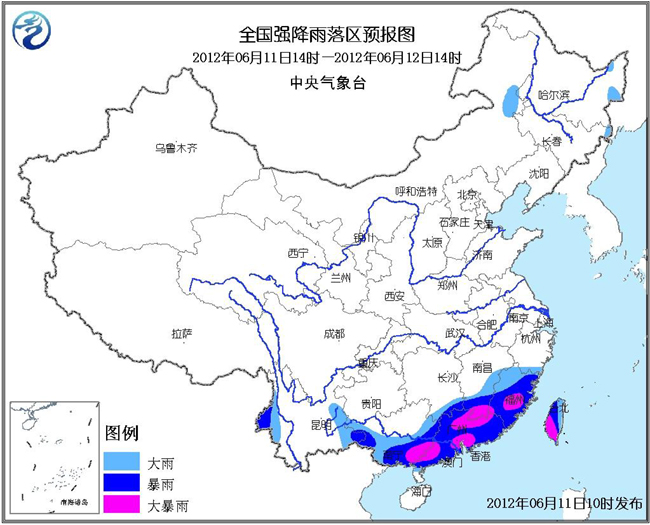
  China Meteorological Network News At 10: 00 on June 11, the Central Meteorological Observatory continued to issue a blue rainstorm warning. It is estimated that there will be heavy rainstorms in southern Jiangnan, central, eastern and southern South China, southeastern and western Yunnan, and Taiwan Province from 14: 00 on the 11th to 14: 00 on the 12th, including heavy rainstorms (100-150 mm) in parts of southwestern Jiangxi, central and southern Fujian, southeastern Guangxi, central and western Guangdong, and southern Taiwan Province. These local areas are accompanied by strong convective weather such as short-term thunderstorms and strong winds.


  The meteorological department suggested that the government and relevant departments should do a good job in emergency prevention of rainstorm according to their duties, and all departments should strengthen information communication and emergency linkage; Do a good job in the drainage of cities and farmland, and pay attention to prevent possible disasters such as flash floods, landslides and mudslides; Cut off the outdoor power supply in dangerous areas and suspend outdoor work; The public should take measures to deal with the rainstorm and make reasonable arrangements for travel, production and life.  


(Source: Editor of Central Meteorological Observatory: Li Wenqin)


  [Meteorological Science Popularization]


  Rainstorm and its prevention and response


  Heavy rain refers to rain with high precipitation intensity, which is often formed in cumulonimbus clouds. According to meteorological regulations, rain with an hourly rainfall of more than 16 mm, or a continuous rainfall of more than 30 mm for 12 hours and a 24-hour rainfall of 50 mm or more is called "rainstorm". According to its precipitation intensity, it is divided into three grades, that is, the 24-hour precipitation is 50-99.9 mm, which is called "rainstorm", the 100-249.9 mm is called "heavy rainstorm" and the 250 mm is called "extraordinary rainstorm". However, due to the different characteristics of precipitation and topography, the standards of rainstorm and flood in different places are also different. In business practice, rainstorm can be divided into local rainstorm, regional rainstorm, large-scale rainstorm and extra-large rainstorm according to the scope of occurrence and influence.


  The local rainstorm lasts only a few hours or dozens of hours, and generally affects tens to thousands of square kilometers, causing less harm. However, when the rainfall intensity is extremely high, it can also cause serious casualties and property losses.


  Regional rainstorm generally lasts for 3 ~ 7 days, and the influence range can reach 100 ~ 200,000 square kilometers or more. The disaster situation is average, but sometimes it may cause serious regional rainstorm and flood disaster due to the extremely strong rainfall intensity.


  Extra-large-scale rainstorm lasts the longest, and it is generally a combination of continuous rainstorms in many areas. The rainfall can last intermittently for about 1 ~ 3 months, and the rain belt can be maintained for a long time. Torrential rain is a kind of disastrous weather, which often causes floods and serious soil erosion, leading to major economic losses such as engineering accidents, dike breaches and crop flooding. Especially for some low-lying and closed terrain areas, rainwater can not be quickly vented, resulting in farmland water accumulation and soil moisture over-saturation, which will cause more disasters.


  How does the city "Rain Island" avoid waterlogging?


    At present, China is at the peak of urbanization, population and wealth are constantly concentrated in cities, and the area of cities is getting bigger and bigger. Urban waterlogging not only brings inconvenience to people’s travel and life, but also may cause some secondary disasters. How to carry out scientific planning and design to ensure people’s travel and property safety?


  Urban "Rain Island Effect" and "Turbid Island Effect"


  Urban waterlogging refers to the phenomenon of waterlogging disaster in cities due to heavy precipitation or continuous precipitation exceeding urban drainage capacity. The amount of precipitation in a city depends firstly on the atmospheric circulation and secondly on the environmental conditions of the city itself.


  Modern urban waterlogging has two characteristics: first, the universality of urban waterlogging exists in many cities in China. Secondly, the incidence of waterlogging is high in some specific places in the city, such as overpasses; With the construction of modern cities, underpasses, railway bridges and highway bridges crossing the street also occur frequently. In addition, in recent years, the phenomenon that precipitation in many cities is obviously greater than that in the surrounding suburbs has become more and more prominent.


  High-rise buildings in cities are compared to "reinforced concrete forests", and with the increasing density of "forests", air conditioners and automobile exhaust increase the heat, forming a hot air flow over cities. The thicker the hot air flow, the more likely it is to cause precipitation. At the same time, the concentrated buildings in the city reduce the wind speed, and the weather system such as strong rain belt stays over the city longer than the empty suburbs, and the total precipitation increases, which is called the "rain island effect". The "rain island effect" mainly appears in flood season and rainstorm, and the frequency and intensity of urban rainstorm are higher than those in surrounding areas, which is easy to form flood disasters.


  The concentration of industry, the large number of vehicles and the dense population in the city lead to the turbidity of polluted gases and dust in the air much higher than that in the surrounding areas, forming the urban "turbidity island effect". The influence of urban "turbid island effect" on rainfall is as follows: dust and other turbid substances are the most needed condensation nuclei for water vapor in clouds to change into rainfall. The more condensation nuclei there are over the city, the easier it is for water vapor to condense here and cause precipitation, thus increasing rainfall.


  Generally speaking, the factors affecting urban waterlogging mainly include three aspects. One is rainfall, especially heavy rainfall. When the frequency and intensity of rainstorm in cities are higher than those in surrounding areas, it is easier to form flood disasters. The second is topography. It is not easy to form stagnant water in areas with relatively high terrain, but it is easy to form waterlogging in areas with relatively low terrain, which is also the reason why a large amount of stagnant water is easy to appear in overpasses and underground passages. Third, the urban drainage system is not perfect. In some cities, there are many "debts" in the drainage network, the pipes are aging and the drainage standards are relatively low. In addition, a large number of hard pavements, such as asphalt pavement and cement pavement, have poor permeability and are easy to cause water accumulation.


   How to effectively deal with the super-standard rainstorm


  Unexpected events such as super-standard rainstorm will pose a great threat to urban waterlogging. Xie Yingxia, director of the Institute of Engineering Planning and Design of China Urban Planning and Design Institute, believes that combining engineering measures with non-engineering measures is an effective way to deal with the super-standard rainstorm, and it should be comprehensively considered from the aspects of economy and environment. First of all, for hard engineering measures, the standards should be appropriate and the emergency rescue system should be improved. When planning and designing, we should implement the construction contents, such as where to build reservoirs, where to divert floods, where to build pumping stations and where to build gates. Secondly, for soft non-engineering measures, it is necessary to strengthen the construction of emergency system and ensure its normal operation. In recent years, foreign countries have used ecological methods to improve the conditions of rainwater system, such as using permeable bricks to pave sidewalks, increasing permeable layers and reducing hard pavement. Storage regulation is also one of the main measures they usually take.


  In addition, considering the environment, it is necessary to build an eco-city to meet the scientific development of the city. It is a good idea to beautify the city and store water and prevent waterlogging, such as increasing green space, reducing runoff, and using permeable bricks in sidewalks, squares and other areas. At the same time, planning and design methods that are economical, environmentally friendly and timely drainage are also needed to be strongly advocated.  


  So, how to carry out scientific planning and design to deal with urban waterlogging? Xie Yingxia said: First, we should update our concepts and pay attention to the problem of urban drainage; Second, it is necessary to introduce urban drainage planning and design standards as soon as possible, clarify the different drainage standards of different cities, and rationally arrange drainage facilities; Third, we should rationally choose urban construction land; Fourth, rational planning, scientific management, and targeted drainage planning; Fifth, we should take precautions against excessive rain, and reduce the loss of waterlogging by strengthening meteorological forecast and improving emergency management system; Sixth, we should gradually improve the construction standard of drainage system; Seventh, we must formulate good drainage measures. According to the local topography, the measures of flood interception, diversion and storage are studied; Eighth, we should pay attention to taking non-engineering measures, and it is strictly forbidden to occupy shed covers on both sides of the river, fill ditches and build land, and block the river bed. River ditches should be dredged in time to ensure smooth drainage.

Is there a minimum wage for summer jobs? You need to know these things when you work during the holiday.

  "I want to work in Guangzhou during the summer vacation, and my salary is probably 15 yuan/hour, but the online minimum wage in Guangdong is 20.3 yuan/hour." Recently, Xiaofei (a pseudonym), a college student studying in Guangzhou, is worried about finding a suitable summer job. He found that at present, the wages of summer jobs in many units on the market are lower than the minimum wage. Not only that, but some labor agency companies also instigate students to fabricate work experience when applying for jobs, pretending to be long-term jobs, and there is no uniform standard for agency fees, which varies widely.

  When the summer vacation comes, many students at school want to use the holiday to do odd jobs, on the one hand, to accumulate work experience, on the other hand, to earn some living expenses. However, how to sign the contract for the students who are still in the ivory tower? Sign with who? What is the minimum wage? Is the labor agency reliable? ….. A series of questions made them feel at a loss.

  In the past few days, the reporter visited a number of employers and labor agencies and found that there are indeed hidden traps. Summer jobs, students should not act blindly. It’s not too late to go to work after reading the reporter’s combing and the lawyer’s advice.

  Is the summer job salary lower than the minimum wage?

  Xiaofei, a native of Guangxi, is currently studying in a university in Guangzhou. This summer, he wants to use his holiday to do some temporary work and subsidize his living expenses. After inquiring about a number of units, Xiaofei found that the wage gap of summer workers is very wide. "Generally, every hour in 15 yuan, the better one can reach 18 yuan, and the lowest one is only 10 yuan." He said.

  In order to get more recruitment information, Xiaofei began to search online. During this period, he found that the minimum wage in Guangdong was 20.3 yuan/hour. "According to this standard, the summer job I know is basically lower than this." Xiaofei said.

  On July 18th and 19th, the reporter visited several convenience stores and stores in Tianhe District and Yuexiu District of Guangzhou, Shiqiao and Dashi in Panyu District, and Dashadi in Huangpu District, asking about the recruitment situation in summer.

  The reporter found that the wages of most convenience stores are 20.3 yuan/hour, just in line with the minimum wage. Xiaoyan (a pseudonym), a junior who works part-time in a shopping mall on Sports West Road, said: "We are in 24 yuan, but we have to do it for 12 hours a week." However, the above employers basically do not recruit short-term summer jobs, but only long-term jobs. "It takes almost one month to get familiar with all the work in the store. Generally, if you can’t do it for a long time, the store will not recruit." Xiaoyan.

  The staff in charge of recruitment in a factory in Dashi, Panyu District told the reporter: "Factory training requires costs, and summer jobs leave for a while, which is not worthwhile for us."

  In some stores and factories in Panyu District and Huangpu District, the reporter found that some employers are willing to recruit summer workers, and the wages offered are basically around 15 yuan/hour.

  According to the Notice on Adjusting the Minimum Wage Standard for Enterprise Employees in Guangdong Province issued by the Guangdong Provincial Government, from July 1, 2018, the minimum wage standard in Guangzhou was adjusted to 2,100 yuan/month, and the corresponding hourly minimum wage standard for part-time employees was 20.3 yuan/hour.

  For the case that the salary of summer workers is less than 20.3 yuan/hour, the reporter called the Guangzhou citizen service hotline, and the staff responded that,20.3 yuan/hour is applicable to part-time employees, which refers to employees who have signed contracts. Generally speaking, they work no more than 4 hours a day and 24 hours a week.

  "Summer workers can compare these requirements to see if they belong to this range. If the summer worker and the employer sign a labor contract, they can refer to this standard, otherwise they cannot follow this standard. " The staff said.

  Is the intermediary a trick or a cheat people?

  During the interview, the reporter found that since most employers like to recruit long-term workers, many employment agencies have come up with "countermeasures" and will teach college students who want to find summer jobs "tips".

  When Xiao Fei was looking for a job, he asked several intermediary companies. After learning that Xiao Fei could only work in summer, these companies told Xiao Fei not to tell the employer that he could only work in summer. "The intermediary elder sister told me that she couldn’t say that she only worked for more than a month, and asked me to conceal my student status and lied that I had experience." Xiaofei said.

  What Xiaofei said, the reporter also encountered many times during the visit.

  In order to apply for a summer job, the reporter contacted an intermediary agency named Guangzhou Xiangcai Labor Dispatch Co., Ltd., and a manager of the company, wang xing, received the reporter. She recommended to the reporter the job of quality inspector in an audio factory in Dashi Street, Panyu District, saying that her salary is 13 yuan/hour, and she works about 11 hours a day and 26 days a month, with a total salary of about 3,800 yuan/month.

  At the same time, Ms. Wang, the intermediary, repeatedly told reporters that she could not say that she was a summer job when interviewing. When the reporter asked if he could get a salary if he went in as a long-term worker, but he had to resign early, Ms. Wang replied: "You can resign after one month. The key is to be able to go in." As for whether a labor contract will be signed, Ms. Wang will definitely sign it in response, but she does not know the details of the contract.

  "If the time limit written in the contract is not fulfilled, the salary will not be guaranteed." The relevant person in charge of an enterprise in Huijiang Deep Blue Industrial Park told the reporter that pretending to be a long-term worker would only "lose more than gain".

  In addition, the reporter also found that the audio factory introduced by Ms. Wang, the intermediary, is also conducting direct recruitment. The reporter learned in the factory that the salary equivalent to the above position is about 4,100 yuan/month, which is about 300 yuan higher than the price offered by the intermediary.

  "Be sure to find it yourself. I just came out to work and also found an intermediary. Every month, my salary is sent to me by the intermediary. I asked my colleagues to find out that the intermediary deducted a lot of my salary, "Xiao Li, who works in a processing factory in Panyu, told reporters." And the intermediary market is very chaotic, and the intermediary fees vary greatly, from 50 yuan to 200 yuan. "

  Lawyer’s suggestion: signing an effective labor contract is an important basis for safeguarding rights.

  The reporter consulted a number of lawyers on issues related to part-time jobs for summer students. Zou Jiawang, a lawyer from Guangdong Chanbang Law Firm, suggested that students should pay attention to distinguish between labor relations and labour relation when looking for summer jobs. Labor relations refer to the long-term, fixed, managed and managed relationship between workers and employers, and labor relations are bound by the minimum wage standard. Short-term summer jobs often belong to labour relation. Enterprises may not sign labor contracts with workers, and the wages are determined by the employer and the workers through consultation.

  Lawyer Zou Jiawang reminded that,Summer workers should sign effective labor contracts with employers, which is an important basis for safeguarding rights.If a valid contract is signed and the salary is still below the minimum standard, you can report it to the labor inspection brigade of the Municipal Bureau of Human Resources and Social Security, or file a labor arbitration to ask the enterprise to make up the salary.

  Lawyer Zhao Shaohua of Beijing Deheheng (Guangzhou) Law Firm said,Summer workers who have not signed a contract but provided labor services can negotiate with the employer to determine the remuneration, which is not less than 80% of the salary standard of the same post in the probation period in principle.Although the wages of summer workers are not subject to the minimum wage standard, if the employer deducts or defaults on the wages of summer workers, summer workers can go to the Human Resources and Social Security Bureau for complaints and accusations, and can directly sue the court for rights protection.

  [Reporter] Jin Zuzhen

  [Image] Jin Zuzhen

  [Intern] Tang Zhuo Zheng Kaiyu

  [Proofreading] Yang Yuanyun

  [Author] Jin Zuzhen

  [Source] Southern Newspaper Media Group Southern+Client Southern Number ~ Self-operated Number ~ Daily Mobile Self-operated Number ~ Southern Probe