18 people sneaked into the country from Myanmar! The reason behind it is not simple …

Original Guan Ying Zhang Peng Du Dapeng Fiona Fang
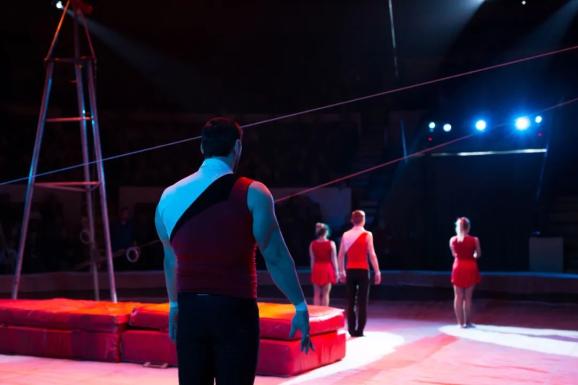
Image source: photo network

This article is the original manuscript of Fiona Fang magazine.

Unauthorized reproduction is prohibited.

He looks unremarkable, dark-skinned, lean, and doesn’t talk much. He looks older than his actual age and doesn’t look like a "post-80 s", but when he talks about acrobatics, he seems to be a different person, and his words suddenly increase, and his eyes suddenly have light.

This is the prosecutor’s first impression of Yan Youlu. Based on this impression, it is really hard to imagine that he is a criminal suspect who illegally organized a number of foreigners to sneak into China for acrobatic training and performance. However, with the in-depth handling of the case, the prosecutor found that the reason why Yan Youlu embarked on the road of crime was not only related to his personal and family, but also to the inheritance of the whole Qiuqiao acrobatics.

The bitter life of acrobatics

In June 2021, the police in Huai ‘an District, Huai ‘an City, Jiangsu Province found that there were some unidentified foreigners in the acrobatic troupe on Yanyou Road, Crystal Village, Boli Town. Soon, Yan Youlu took the initiative to surrender.

Yan Youlu was born in Yan Jiaban, a well-known acrobatic family in Qiuqiao Town, Huai ‘an District. His father and grandfather are both in this line of work. Yan Youlu has been practicing kungfu with his parents since he was five years old, and began to perform on stage at the age of seven. In order to concentrate on practicing kungfu, he dropped out of primary school in the first grade. At that time, Yan Youlu always suffered from acrobatics, regardless of spring, summer, autumn and winter, even if he was physically injured, he persisted.

In an aerial training, Yan Youyou fell from a height of several meters and almost died. Until now, he still has an old scar several centimeters long on his neck.

When Yan Right’s father talked about this son, he couldn’t help but shed tears. He always said that Yan Right was so bitter step by step. Under the strict discipline of the family, Yan Youlu, who is quite talented in acrobatics, has gradually become the pillar of the acrobatic troupe. He performed with the acrobatic troupe all over the country and earned a hard money.

Recalling the previous experience of crisscrossing, Yan Youlu’s face showed a rare smile.

He proudly said: "At that time, most people went out by boat. As soon as the ship landed, we found a place with props on our backs, simply set up a shelf, knocked a few gongs and began to perform. After the end, the audience didn’t want to leave. "

In June 2007, Yan Youlu, who was in his early twenties, officially took over the acrobatic troupe from his father, became the head of the acrobatic troupe, and became the fourth generation of acrobatic descendants in the family. In December 2018, Yan Youlu was named as the acrobatic inheritor of the intangible cultural heritage project in Huai ‘an District.

Go abroad to recruit students.

In 2014, Yan Youlu’s colleague friend said that he had a relative who made a lot of money performing acrobatics in Myanmar. Yan Youlu, who was worried about the survival of the acrobatic industry, was very excited and had a bold idea.

At that time, the domestic acrobatic market was not very prosperous, and it was difficult to recruit acrobatic apprentices and inherit them all over the country. All acrobatic troupes were faced with the dilemma of no successor, and the existing acrobats were older. Especially in recent years, parents pay more attention to culture and education, and are reluctant to send their children to learn acrobatics. It is difficult for acrobatic troupes around the country to recruit young students to inherit their skills. In this way, acrobatic talents will inevitably be cut off, and the acrobatic troupe will face the risk of bankruptcy and dissolution. It is in the face of such a dilemma that Yan Youlu made up his mind to rush to Myanmar.

In August 2014, when Yan Youlu performed for the first time in Myanmar, he was warmly welcomed by the local people and attracted the attention of the local government. The local government quickly sent an invitation letter to Yan Youlu. The local government wants to cultivate local acrobatic talents, and Yan Youlu urgently needs young acrobatic students to support the acrobatic troupe and continue the acrobatic inheritance.

In October 2014, the two sides signed a contract for win-win cooperation. The local government recommended students aged 12 to 16, and Yan Youlu trained them to learn acrobatic skills. Soon, considering the limited local training conditions, Yan Youlu decided to take these students to Qiuqiao’s hometown, but the problem is, how to bring so many students back to China from Myanmar? Due to the special location of the China-Myanmar border, it is close to Yunnan, China, and the practice of smuggling is more common in the local area. Yan Youlu, who has a weak legal consciousness, is lucky.

Since 2016, Yan Youlu has smuggled 18 young students into the mainland from the Yunnan border without going through any entry and exit formalities. He also cooperated with other acrobatic troupes to introduce some students to acrobatic troupes in Shanxi, Henan and Sichuan.

In the investigation stage, Huai ‘an District Procuratorate intervened in the case in advance. In October 2022, the Huai ‘an District Procuratorate filed a public prosecution in the Huai ‘an District Court. With the efforts of the procuratorate, Yan Youlu returned all the illegal income of 500,000 yuan. Considering the circumstances of Yan Youlu’s surrender and voluntary confession and punishment, the prosecutor put forward sentencing suggestions for Yan Youlu to reduce the punishment.

On April 3, 2023, Huai ‘an District Court sentenced the defendant Yan Youlu to three years’ imprisonment, suspended for five years, and fined him 110,000 yuan for organizing others to cross the country (border) and stealing the country (border).

Promote the rescue work of Qiuqiao acrobatics

In handling the case, the dilemma of Qiuqiao acrobatics also attracted the attention of the procuratorate. The prosecutor felt that behind Yan’s right-wing crime, not only was his personal legal consciousness indifferent, but the occurrence of this case also had a certain relationship with the acrobatic inheritance dilemma including Qiuqiao Acrobatics.

Wuqiao in the north and Qiuqiao in the south. Qiuqiao acrobatics was born in the late 19th century. In the 1970s, Qiuqiao Acrobatics was founded and developed by Yan Youlu’s grandfather. From the beginning, a few people pushed carts around the streets, to the peak, Qiuqiao Acrobatics developed more than 50 performance groups, with more than 1,500 employees, more than 200 animals such as horses, tigers and lions, and more than 600 kinds of performances.

Their large-scale acrobatic programs have won many awards, and they have also gone abroad and become famous overseas. In 2008, Qiuqiao Town was named the "Hometown of Folk Culture and Art in China" by the then Ministry of Culture. In September 2014, Huai ‘an District was named "China Acrobatics Town" by China Acrobatics Association.

However, the glory of Qiuqiao acrobatics has finally become a thing of the past, and the development of acrobatic industry is shrinking day by day in the generation of Yan Right.

Especially in recent years, there are fewer opportunities for acrobatic performances. In order to survive, acrobats either start a sideline or change careers. Of course, the most deadly thing is that the acrobatic troupe, including Qiuqiao Acrobatics, has been unable to recruit young apprentices for many years. In September 2022, when the prosecutor came to Qiuqiao for an investigation and visit, the survival of the acrobatic troupe was already very difficult. The difficult problem faced by Yan Youlu Acrobatic Troupe is also the dilemma that the whole Qiuqiao Acrobatics cannot solve.

During the handling of this case, prosecutors have done a lot of extra-case investigation work, and realized that the acrobatic industry is not easy to survive. They also urgently hope that through handling cases and performing their duties, they can unite the efforts of social governance, promote government departments to do good deeds, contribute to the inheritance and development of Qiuqiao Acrobatics, fulfill their procuratorial responsibilities for protecting cultural diversity and cultural brands with local characteristics, and find the optimal solution for handling cases.

On October 14, 2022, Huai ‘an District Procuratorate wrote a research report on the development status of acrobatic industry in this area and submitted it to Huai ‘an District Committee and District Government, which received the attention and instructions of the district party secretary. On October 19, 2022, Huai ‘an District Procuratorate issued a procuratorial proposal to Huai ‘an District Culture, Radio, Film and Tourism Bureau, suggesting that Qiuqiao Acrobatics should be comprehensively counted as soon as possible and a database of Huai ‘an Acrobatics and Acrobatics Culture should be established. Actively seek special assistance funds; Introduce a mechanism to promote Qiuqiao acrobatics into the campus, coordinate tourism resources, and expand the performance opportunities of acrobatic groups; Strengthen support, allocate special funds, build acrobatic training and performance bases, and support and encourage and commend acrobatic innovative talents and projects; Organize and hold Huai ‘an Acrobatic Culture Festival and Acrobatic Performance Competition regularly to enhance the popularity of Qiuqiao Acrobatics.

On October 25, 2022, Huai ‘an District Procuratorate promoted the Propaganda Department of Huai ‘an District Committee to hold a symposium on the inheritance and development of Qiuqiao Acrobatics. Representatives from Huai ‘an Cultural and Broadcasting Tourism Bureau, Education and Sports Bureau, Boli Town Government and Huai ‘an Acrobatics Association discussed ideas and measures to help Qiuqiao Acrobatics innovate and develop continuously. With the joint efforts of all departments, Qiuqiao Acrobatics has entered local primary and secondary schools. Simple and easy-to-learn basic acrobatics will be included in the curriculum of campus interest classes, so that interested students can feel the charm of traditional culture from an early age.

(The people involved in the article are all pseudonyms. This article has been deleted. For more details, please pay attention to the last issue of Fiona Fang in August)

The original title of this magazine: "Acrobatic inheritors commit crimes, where will this go?"

Editor Su Chen Wang Li Design Liu Yan

Procuratorial Daily reporter Guan Guanying

Correspondent Zhang Peng Du Dapeng

Wonderful in the past

Original title: "18 people sneaked into the country from Myanmar! The reason behind it is not simple … "

Read the original text

The Historical Background of Heavenly Generals and Heroes: Mysterious Roman Army Employed by Han Dynasty

New header. jpg


    Special feature of 1905 film network The film starring Jackie Chan and a group of Hollywood stars was released in the mainland on February 19th. Although the main appeal of this film is not to restore history, the historical background is still an important part of the film. The repeated invasion of Xiongnu beyond the Great Wall, the mysterious appearance of western troops and various contradictions in the process of national integration are all problems that the Han and Yuan emperors have to face and solve after they acceded to the throne. On the whole, the film’s "entertainment adaptation" of history is well-founded.

    In this film, Jackie Chan plays a Han Dynasty general named Huo An. He meets Roman general Lucius and his small army in the Gobi Desert in the Western Regions. At that time, the border was always invaded by the Huns. Li Rengang, the director and screenwriter, then built an interesting story around three forces: the general of the Han Dynasty, the Xiongnu and the Roman army. In fact, the real history of this period is also very interesting. During the reign of Emperor Han and Yuan, Wang Zhaojun was sent to the fortress to marry the Huns, crusade against Zhi Zhi Khan, and captured a Roman army. In the west, Caesar and Pompeii clashed with each other, which led to the Roman Civil War. The result of this civil war directly laid the political, economic and cultural structure of the western world in the next 300 years.

There is a certain historical basis for the Roman army to appear on the border of China.

[The legendary disappearing army]

On the border of China, Roman troops were employed by the Han Dynasty to discuss Zhi Zhi Khan.

    In the Western Han Dynasty during the Han and Yuan Dynasties, a mercenary from the Roman Republic did appear, which is probably the historical basis of the plot of Heavenly Generals and Heroes. In 53 BC, crassus, consul general of the Roman Republic, launched a war against Iran. I thought this was a quick battle, but I didn’t expect the Iranian army to panic in the Roman army and crassus was captured and beheaded. In 20 BC, Rome and Iran signed an armistice agreement. At this time, the Roman Republic asked Iran to return the captured army, but the army that broke through from the Iranian encirclement disappeared without a trace.

    For many years, the whereabouts of this 6,000-strong army have been unknown. It wasn’t until 1947 that the English sinologist De Xiaoqian wrote the article "The Strike of Ancient China" that the mystery was solved. In ancient China, Liba referred to the Roman Republic. The "ancient China’s Li-ba-cheng" refers to a city inhabited by Romans that once appeared on Chinese territory. In the biography of Han Chen Tang written by Ban Gu, it is recorded that in 36 BC, a strange army appeared on the road where Chen Tang led more than 40 thousand troops to crusade against Zhi Zhi Khan. This army has "more than 100 infantry, fighting in a fish-scale array" and "guarding the city with heavy wood". According to historians’ interpretation, this defensive formation of "heavy wooden city" fortifications and fish scales with circular shields was only adopted by the Roman army. Historians reasoned that this strange army was a small force that broke through after the failure of the Roman Republic to go to Iran.

    It is speculated that this unit was unable to return to China because the road was blocked by the Iranians when it broke through, so it had to turn to the plateau in Iran and wait for an opportunity to move eastward. Fortunately, they tore a hole in the lax defense line in eastern Iran and migrated to Central Asia to go to Zhizhi. Finally, they were collected by Chen Shang and brought back to China. Of course, this army was not idle after the surrender. They became Chen Tang’s "mercenaries" and made great contributions to the campaign against Zhi Zhi Khan. Later, the Emperor of the Han Dynasty issued a letter to place them at the foot of Zhaomian Mountain (now Yongchang County) in the south of Fanhe County, and put them in the county. In 592 ad. In view of the fact that Liba people have merged with Han people, Emperor Wendi of Sui Dynasty issued a letter to merge Liba County into Fanhe County. At this point, Li Ba built the county for 612 years. In this way, the Liban people in China quietly disappeared in the vicissitudes of history.

The ethnic groups on the border are extremely rich and diverse.

[The famous Silk Road]

The Western Han Dynasty was prosperous, and all ethnic groups joined Zhaojun and went out to make a good knot.

    Although Kung Fu and martial arts are the selling points of "Heavenly Master", Li Rengang still set a tone of national unity and world peace for the film. On the famous "Silk Road", various nationalities gathered and blended here, which surprised the audience at the great national strength and tolerance of the Han Dynasty. The so-called Silk Road refers to the trade route in the northern part of Eurasia, which is in contrast with the ancient tea-horse road in the south. This trade route was first developed by Zhang Qian during the reign of Emperor Wu of the Western Han Dynasty. This action is called "the journey of hollowing out", and the envoys sent by Emperor Wu of the Han Dynasty reached Alexandria in Egypt as far as today. This is the farthest country reached by the official envoys of the Western Han Dynasty. In the Eastern Han Dynasty, Ban Chao extended the Silk Road again, reaching as far as Rome from Xi ‘an.

    According to historical records, in the Western Han Dynasty, roughly sixteen ethnic minorities, such as Xiongnu, Donghu, Wuhuan, Xianbei, Turkic, Qidan, Rouran and Uighur, were active in the territory of China. The western Han government ensured the overall stability of these ethnic minority areas through certain means such as war, administrative regional setting, intermarriage and trade. These policies make the southwest, south China and southeast China also join the national rule. Although the control over the southern minorities at this time was far less powerful than that in Ming and Qing Dynasties, the military and political obstacles between the central plains and the southern mountainous areas were lifted, which made the south in a stable and orderly environment for a long time in the Han Dynasty and undoubtedly promoted the exchanges between the southern minorities and the central plains.

Zhaojun’s departure from the Great Wall and his relatives contributed to the peaceful coexistence of Han and Xiongnu.

    When it comes to the national integration during the Han and Yuan Dynasties, we have to say that Zhaojun, who is well-known in Chinese, went to the fortress. This allusion tells the story of a maid-in-waiting named Zhaojun who pretended to be a princess of the Han Dynasty and married Uhaanyehe of the Xiongnu. It is said that Zhaojun was very beautiful and natural and graceful. Emperor Han Yuan regretted seeing such a beautiful maid-in-waiting going to marry. During his life in Xiongnu, Wang Zhaojun adapted to the lifestyle there and got along very well with the local people. She not only advised her husband to live in harmony with the Han Dynasty, but also spread the culture of the Han nationality to the Huns. It should be said that the marriage between Wang Zhaojun and Xiongnu is not only a political marriage, but also a cultural integration. Her arrival, in a sense, "assimilated" Huns. Perhaps because of her, the Han Dynasty and Xiongnu lived in harmony for 60 years. After Wang Zhaojun’s death, she was buried in Daqing Mountain controlled by Huns. The Huns built a tomb for her, and later generations called her tomb "Qingzhong" and regarded it as a fairy.

The struggle between Caesar and Pompeii is brilliantly presented in the English drama Rome.


[What happened in the Roman Empire]

There was a "great earthquake" in the Roman Republic. Caesar and Pompeii tore each other apart.

    During the Han and Yuan Dynasties, the whole Han Empire basically presented a thriving scene, while the Roman Republic was not peaceful at the same time. Because of the above-mentioned "Rome was defeated by Iran", a large earthquake in the political circle of the Roman Republic was triggered. In 60 BC, crassus, Caesar and Pompeii, three politically frustrated people, formed the so-called "First Triumphal Alliance". However, these three people, strange bedfellows, have never shared common interests, and this alliance will soon be in jeopardy. After the defeat of the Iranian crusade and crassus’s beheading, the remaining contradictions between the two giants intensified. Caesar’s expedition to Gaul was successful, and he mastered a large number of troops. At the same time, he also got a lot of public support with the book "The Battle of Gaul", and with the huge wealth from Gaul, he gradually stepped onto the peak of strength and power. Under such circumstances, the Senate began to unite with Pompeii, who was left out in the cold, and began to attack Caesar and his henchmen.

    In 50 BC, Pompeii and the Senate made a decision to ask Caesar to surrender his military power and return to China to serve in the following year. In a practical sense, this announced Caesar’s "demotion" and also meant a complete break between Caesar and Pompeii. Caesar, who received this decision, did not buy it. He wrote back to the Senate and Pompeii, asking Pompeii to surrender the military power, otherwise he would not obey the decision of the Senate and would not hesitate to launch a civil war to safeguard his dignity. After receiving the reply, the Senate thought that Caesar had handed in an essay, resolutely refused to follow it, and insisted on their previous decision. Caesar sent an envoy to Rome to mediate, but the envoy was persecuted by Pompeii and the Senate. Knowing this, Caesar was forced to flee to Gaul. The Senate regarded Caesar’s move as a preparation for war, so it declared Caesar a national public enemy. At this point, the civil war broke out in the Roman Republic.

    The civil war in Rome opened a new page in Roman history and made Rome develop from a republic to a new stage of monarchy. When preparing for the war, Caesar carried out the policy of equal rights for residents and Romans in all provinces, which expanded his social foundation and promoted social progress. After the First World War, Rome’s political, economic and social structure became more modern and reasonable, while China would continue to be in a feudal society. Therefore, the Roman civil war that took place during the Han and Yuan Dynasties was barbaric on the surface, but in fact it was a manifestation of progress. Although the Western Han Dynasty was stable and prosperous, it accumulated many social contradictions, and various problems gradually emerged in the next hundred years, which brought even greater disasters.