Tuberculosis broke out in a university in Jiangsu, and this "white plague" never went far.
Original editorial department ke ke Chang Xiao healthy
On the evening of October 14th, Jiangsu Normal University released a message in the official Weibo, confirming the previous media report that dozens of students in the school had tuberculosis, and said that "at present, 22 patients have dropped out of school for standardized treatment".
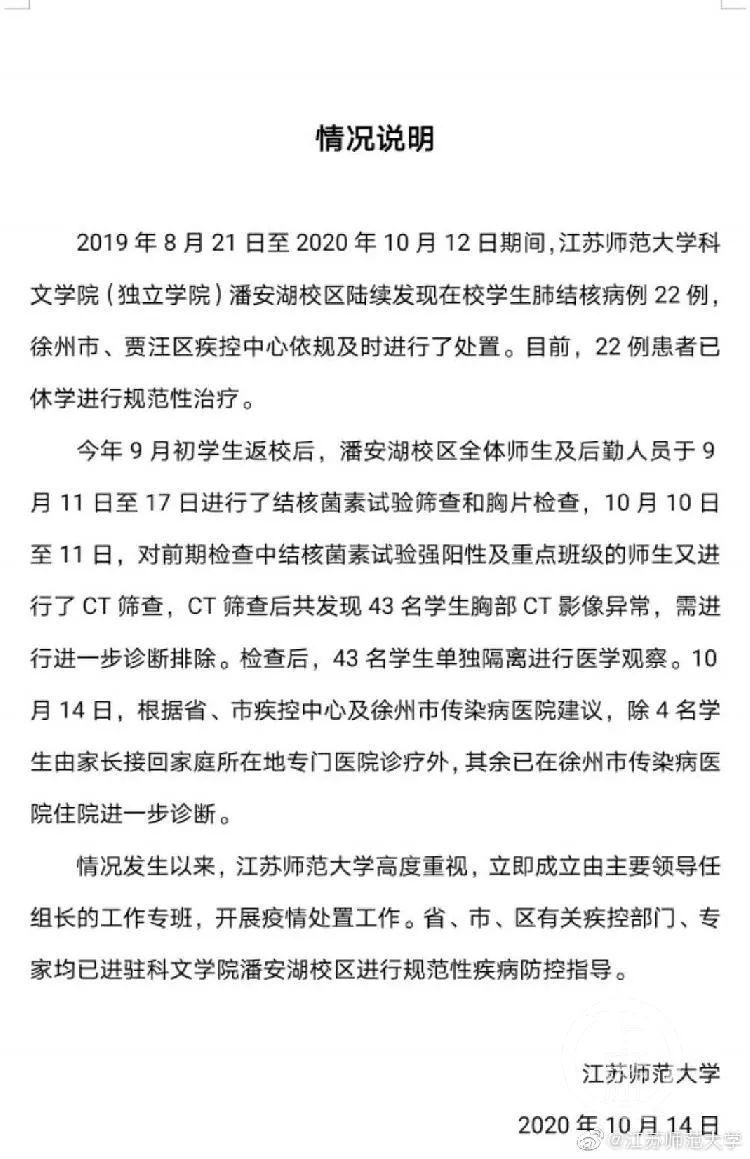
According to the official report of Jiangsu Normal University, after the students returned to school in early September this year, all teachers, students and logistics staff of Pan ‘anhu Campus of Jiangsu Normal University conducted tuberculin test screening and chest X-ray examination from September 11 to 17.
From October 10th to 11th, the teachers and students who were strongly positive in tuberculin test and in key classes were screened by CT. After CT screening, 43 students were found to have abnormal chest CT images, which need further diagnosis and exclusion. (Source: The Paper)
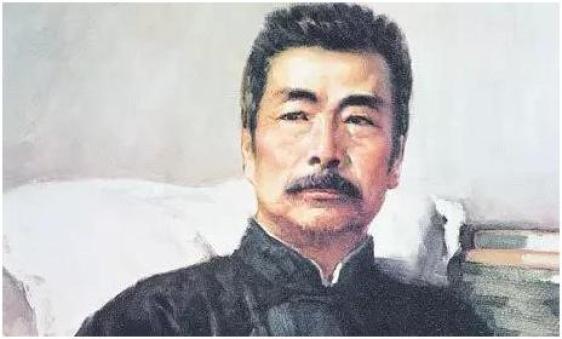
When it comes to tuberculosis, everyone’s general understanding is "hasn’t tuberculosis been eliminated yet?" China still has tuberculosis? " Many people’s understanding of tuberculosis still stays in Sister Lin in A Dream of Red Mansions or "Human Blood Steamed Bread" written by Lu Xun.
But in fact, tuberculosis is still the second most deadly disease among all legal infectious diseases in China.
Therefore, although the impression of tuberculosis has faded in the post-90 s and post-00 s, it is still threatening our health. It is necessary for us to take out tuberculosis again and tell you about this "white plague".
How terrible tuberculosis is, let’s look at the data.
In the past, people in our country "talked about the color change of tuberculosis", and the saying of "ten tuberculosis and nine deaths" was circulated for a long time. It is conceivable that tuberculosis has caused deep mental and physical trauma to our people.
In recent years, due to the emergence of AIDS and drug-resistant strains, tuberculosis has risen again.
According to WHO statistics, China is one of the 22nd countries with serious tuberculosis epidemic, and it is also one of the 27th countries with serious MDR-TB epidemic in the world. At present, the annual incidence of tuberculosis in China is 1.3 million, accounting for 14.3% of the global incidence, ranking second in the world.

Source: Public Health Science Data Center.
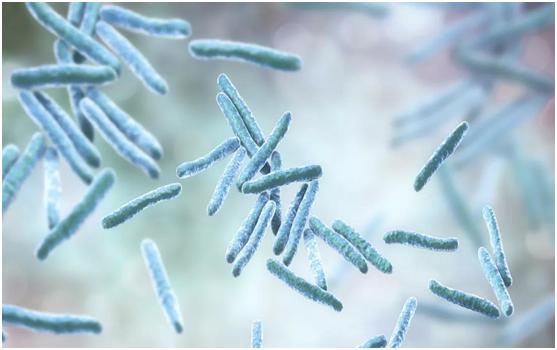
Mycobacterium tuberculosis is a very special kind of bacteria. It has no flagella for exercise and no fimbriae that can be attached to others. It is not resistant to high temperature and its culture conditions are harsh. In the words of the etiology teacher, it is delicate and changeable. So how did such a delicate bacterium evolve into a frightening "white plague"?
The reason lies in its "fickle".
People infected with Mycobacterium tuberculosis are mainly divided into primary infection and secondary infection. Primary infection refers to the first time that people are infected with Mycobacterium tuberculosis. When we are infected with Mycobacterium tuberculosis for the first time, if we don’t get rid of all the Mycobacterium tuberculosis, some "remnants" of tuberculosis will lurk in our bodies. When our immunity is low, they will rise up again and let us be infected again.
Generally speaking, tuberculosis is difficult to diagnose and treat, which is worthy of its title of "white plague". In addition, compared with COVID-19, where the incubation period is 7-14 days, it is difficult for tuberculosis to appear as an explosive pandemic because of its long incubation period, which explains why there is a rare outbreak of tuberculosis in history, but the number of tuberculosis is still huge.
Why do you still get tuberculosis after BCG vaccination?
Since 1978, BCG has been included in children’s immunization program in China. Up to now, more than billions of people have been vaccinated with BCG. Theoretically, all the students in Jiangsu Normal University have been vaccinated, so why do they still get tuberculosis?
First of all, there is a certain time from vaccination to effectiveness. Generally, immunity will not be produced until 4-8 weeks after vaccination, and not all people will successfully produce antibodies after vaccination, and very few people will not be immunized (the same is true for other vaccines such as hepatitis B vaccine). On the other hand, even if antibodies are produced, immunity will decline with age, and it is still possible to be infected with Mycobacterium tuberculosis.
Therefore, BCG vaccination is not once and for all. In daily life, we still have to take the following measures to prevent tuberculosis:
Avoid contact with infectious tuberculosis patients.
Improve the body’s resistance through various methods, such as increasing nutrition and proper exercise.
Pay attention to the ventilation of the room, develop good hygiene habits, and do not spit everywhere.
Don’t talk loudly, cough or sneeze at others. Cover your mouth and nose with a handkerchief when coughing or sneezing.
Regular physical examination, find suspicious symptoms and seek medical advice as soon as possible.
Wear a mask if you need to go out during the infection period, and quit smoking and alcohol during the treatment period.
Is it true that "ten tuberculosis and nine deaths"? Can tuberculosis be cured?
After the diagnosis, we must adhere to the principle of "early, regular, full course, appropriate amount and combination", and most tuberculosis patients can be cured.
After the diagnosis of tuberculosis, the general treatment principle is the principle of chemotherapy. The main function of this treatment principle is to quickly kill a large number of mycobacterium tuberculosis in the focus, so that the patient can be changed from infectious to non-infectious, stop infection, prevent drug resistance, and finally achieve the goal of cure.
Mycobacterium tuberculosis can be divided into four groups according to its metabolic state: A, B, C and D. Flora A is vigorous in growth and reproduction, with strong pathogenicity, accounting for most of Mycobacterium tuberculosis. B and C flora are mostly in a semi-static state, and occasionally there will be explosive growth. D flora is dormant, does not reproduce, and the number is very small.
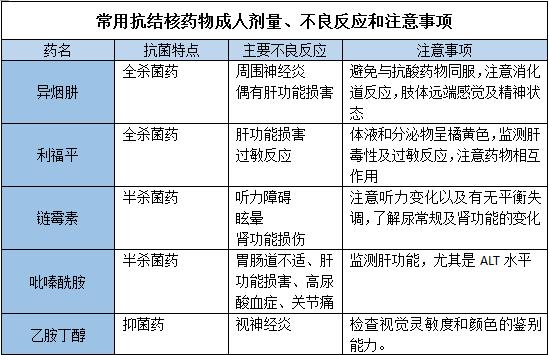
Most anti-tuberculosis drugs can act on flora A, such as isoniazid and rifampicin, which have early sterilization effect, can quickly sterilize within the first 48 hours of treatment, so that the number of flora is rapidly reduced and the infectivity is reduced. The flora B and C are called "stubborn bacteria" because they are in a semi-static state, but killing the flora B and C can prevent recurrence. At the same time, anti-tuberculosis drugs have no effect on D flora.
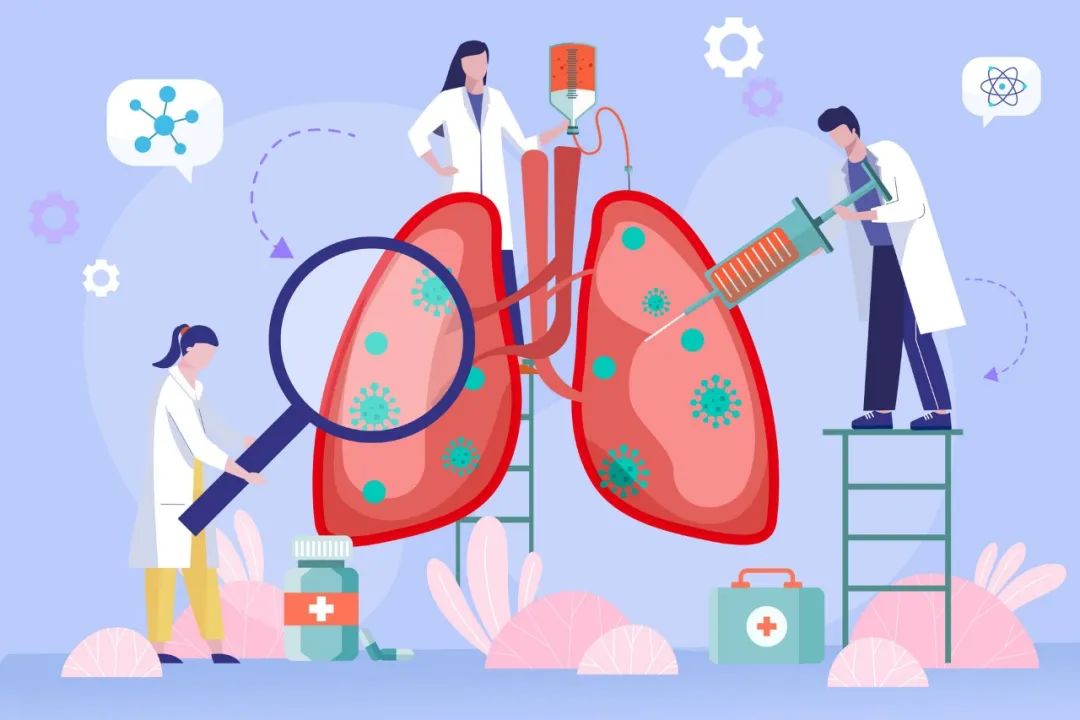
In addition to taking anti-tuberculosis drugs for treatment, there are two therapeutic measures in clinic: symptomatic treatment and surgical treatment. Symptomatic treatment is generally used for toxic and hemoptysis symptoms of tuberculosis patients. For example, patients with toxic symptoms will only use glucocorticoid as appropriate to reduce toxic symptoms and inflammatory symptoms.
Patients with hemoptysis will use pituitrin to stop bleeding. If the situation is serious, patients will also stop bleeding locally through bronchoscope or insert balloon catheter to compress and stop bleeding.
In fact, the outbreak of tuberculosis in colleges and universities is not uncommon.
From August to November 2017, 29 cases of tuberculosis were diagnosed in Taojiang No.4 Middle School; Taojiang vocational secondary school diagnosed 8 cases of pulmonary tuberculosis;
In December 2019, there were many students in the Computer Department of Hebei Industrial Vocational and Technical College, who were sent to the local hospital for treatment because of tuberculosis.
Boarding students at school often have irregular diet, lack of nutrition and great learning pressure, which is easy to cause low immunity. If they have immune-related diseases such as AIDS, they are easy to induce tuberculosis. In addition, students live together, and the living space is relatively small, which constitutes a "hotbed" for the spread of tuberculosis.
As an infectious disease that has been discovered for a long time, the current BCG vaccine is effective in preventing severe tuberculosis, such as miliary tuberculosis and tuberculosis meningitis in children, but it can’t prevent the primary infection, and more importantly, it can’t prevent the recurrence of latent lung infection.
So at this moment, we should pay attention to prevent tuberculosis, do more exercise, get more sunshine, don’t stay up late to play games, strengthen physical exercise and enhance immunity. If you find yourself or your family or friends coughing, expectoration, failing to get well for two weeks, coughing up blood, low fever and sweating, you should explain the situation to the teacher as soon as possible and go to the hospital for examination in time.
Finally, I hope more people can understand the knowledge about tuberculosis, especially the students at school. Please protect yourself!
Original title: "22 people were diagnosed! Tuberculosis broke out in a university in Jiangsu, and this "white plague" has never gone far.
Read the original text