Cultural differences are like mirrors. If you want to make progress, you need to look in the mirror.
 The office of Gao Lizhi, deputy editor-in-chief of Beijing Publishing House, is no different from what I imagined. The books are full, staggered and stacked. To my surprise, he can find the books he needs accurately and casually, and then take them out like a few treasures.
The series "Everyone’s Little Books" occupies several floors of his bookcase and has a wide variety. This is the fist product of Beijing Publishing House. It was selected as the first book recommended by the former State Administration of Press, Publication, Radio, Film and Television to popularize Chinese excellent traditional culture. Its editorial purpose is to encourage everyone to write small books, so that the common sense of various disciplines becomes the starting point of our thinking.
Each book of the series is about 100,000 words in length, in order to make readers gain more knowledge in a short time. Yuan Xingpei, a famous scholar, said in the preface of the series: The so-called "everyone" has two meanings. First, the author of the book is everyone; Second, the book is for everyone to read. "Everyone’s little books" are small in size: readers can put them in their pockets and take them out anytime and anywhere to read a few pages.
Gao Lizhi is the main planner of this series. On the occasion of the publication of 200 series, Gao Lizhi also launched the "Youth Edition of Everyone’s Little Books". In an interview, he said: "In 2020, the Ministry of Education announced the recommended reading list for primary and secondary education, and a large number of’ Little Books for Everyone’ were selected. I just want to take this opportunity to bring out what is suitable for students to read and contribute to education in China. This is the original intention of making the’ Little Books for Everyone Youth Edition’."
Talking with Gao Lizhi can deeply feel his wit and wisdom. Making books is his occupation and also his hobby. His idea of writing books is integrated into his humor, which can support him to talk endlessly, and his words are full of "real money".
Reading, getting started is very harmful.
Gao Lizhi’s ambition to be a "small book for everyone" is to open up the academic context since the introduction of western learning to the East in the 20th century. He believes that the best parts of human culture must be convergent, while the differences are like mirrors. "If you want to make progress, you need to look at yourself in the mirror, which is also the root of philosophy. Before understanding this mirror, we must recognize and respect differences. Cultural heritage knows no national boundaries. It is yours to inherit, and it will never be yours if it is not inherited. " This is Gao Lizhi’s idea.
At present, there are more than 200 kinds of books, and Gao Lizhi consciously embraces and accommodates the ideas, hoping to provide a system for the public, because only by understanding the system can we know how "traditional culture came step by step".
"Everyone’s Little Book" is a book written by professional people for the general public, that is, academic popularization. Many authors of bibliographies are scholars in the Republic of China. In the Republic of China, everyone generally received Chinese and western education, and they knew how to speak to ordinary readers, which was particularly important in Gao Lizhi’s view. He said: "In the Republic of China, these people didn’t have a very detailed concept of discipline in their growing environment. Most of them were nurtured and grown up in traditional culture, which was difficult for future generations to achieve after the accomplishment of Chinese studies. They have generally received western education, and it is of great benefit to look back on our culture with western ideas as a mirror. Therefore, they are generally good at writing and writing beautifully, which is of course suitable for popularization. "
Many authors of contemporary "Everyone’s Little Books" are also admired by Gao Lizhi. The common feature of these authors is Excellence. "Like Teacher Liu Beicheng, we gave him a manuscript. His revised manuscript can fill every space, and the words are still very correct, which can be known by the typesetting staff."
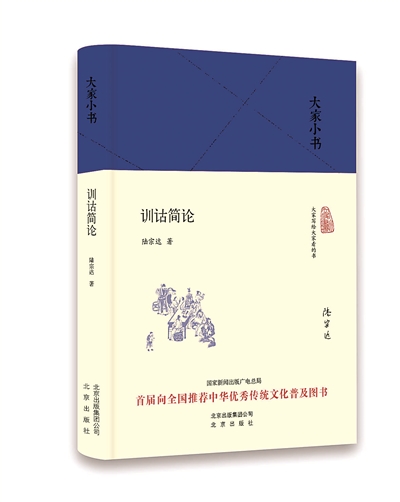
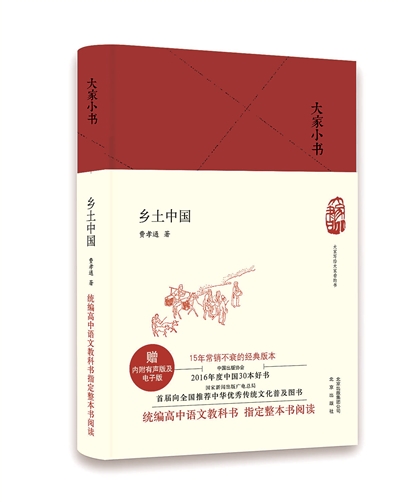
There is a tendency of "everyone’s short books", and the lower the reading target is, the more cross-border it is, and the better the book sales. For example, Mr. Fei Xiaotong’s China in the Country is a must-read for all disciplines of literature, history and philosophy. However, for example, A Brief Discussion on Exegetics and An Introduction to Dunhuang Studies, the authors are everyone, and relatively few people care about them, but Gao Lizhi thinks they are also necessary for everyone’s short books.
To be a "everyone’s little book" with inheritance and ability, Gao Lizhi emphasized not only the concept of "everyone", but also the definition of "folk science" and real experts. "We should take a rigorous attitude towards traditional culture and excellent western culture." And this rigorous attitude, in Gao Lizhi’s mind, is the threshold for version selection and reading. "I don’t deny that although many’ everyone’s little books’ are based on popularity, they all have reading thresholds. I feel that reading is unwilling to overcome difficulties, not to mention the promotion of traditional culture. " It is absurd for Gao Lizhi to talk about Zuo Zhuan by reading a Selected Stories of Zuo Zhuan, and to comment on Confucius’ thoughts by reading a Selected Translation of The Analects, so he thinks it is urgent to popularize the knowledge of edition science.
Gao Lizhi often visits parks and second-hand bookstores. Once I saw a pirated book stall in the park, an old lady was asking the stall owner if he had The Analects. The stall owner handed over a large and thick copy of The Complete Works of The Analects. The old lady looked at it for a long time and said, "So the Analects looks like this?" The stall owner replied, "There is only one Analects, and there is no other Analects." So the old lady bought it, saying it was for her grandson.
Gao Lizhi rated such a mistake as "getting started incorrectly is very harmful". "This piece of ancient books, especially poetry, is really the hardest hit." This is what Gao Lizhi felt for a long time, so after he went to Beijing Publishing House, he immediately put Mr. Lai Xinxia’s Brief Introduction to Classical Bibliography into the "Little Book for Everyone". It is necessary to choose books, know a little about bibliography and edition, and see the author, collator, translator, publisher and even responsible editor. If it is still difficult to distinguish, you can read the author’s profile. "If the author is in management, he interprets Laozi from the perspective of management, and this reader is also in management, so it is right to buy it; And if what you want to know is the basic literature or the history of thought, it is obviously not appropriate to buy it. "
Making books, dislike "quick finished products"
Before writing a book, Gao Lizhi was a media person. While working in the news section of Jiangsu Wuxi Daily, he always wanted to make something that would last longer. "I feel that books are longer than newspapers, so I transferred to the publishing industry in 2003." In his view, publishing and media are interlinked, and the technical means and ideas of publishing editors are generally the same as those of news editors.
Gao Lizhi once paid great attention to bestsellers and found that there must be some social trend of thought behind super bestsellers, just like news from the beginning. The publishing industry is a strange field, the most obvious performance is that having good ideas may not make money. "In whose hand a book finally falls, and in whose hand it comes out, the form is completely different, and books have the fate of books. But there is another saying: it is better to plant trees than to pick mushrooms. Whether the books are finally sent to the people who need them, that is to say, how much sales are, I can’t say that the most creative products are often not as profitable as follow-up products. "
Having seen too many booksellers "dead" on the bestseller road, Gao Lizhi understands that what he should really pursue is long-term sales. In the publishing industry, authors with traffic have absolute advantages, and publishers also need certain brands and traffic. As far as Gao Lizhi knows, many famous book publishers are losing money. In many cases, the editing power of a high-quality book is not weaker than that of the author, which is a comprehensive work. Han Jingqun, editor-in-chief of October Literature and Art Publishing House, agrees with Gao Lizhi: the authors write what they can write and the editors edit what we can. It stands to reason that the author is an intellectual producer and the publisher is only a disseminator, but highlighting a certain aspect of the work to make it suitable for the market reflects the wisdom of the editor. For the real sense of accomplishment of publishing editors, Gao Lizhi summed up three things: leading a certain tendency in the industry; Discover important authors; Make books that others can’t make.
Gao Lizhi is disgusted with making fast-paced products. He thinks that books such as "reading world history in three minutes" are ridiculous. He vomits: "Why do you need so many historians to read world history in three minutes?" For a while, there was a dispute over picture books, and then picture books became hot. Gao Lizhi felt that it was not the right way at the beginning. He believes that images and words bring people different imaginations, and in a sense, concretization limits imagination, but imagination is indispensable no matter where one wants to develop.
Translation emphasizes the translator’s style and self-discipline.
To do anything, you need to have an international perspective. The consensus of Gao Lizhi and his colleagues is that while understanding China’s traditional culture, we need to refer to western culture. Therefore, he presided over the opening of a series of "Everyone’s Little Books" translation houses.
For the translation, Gao Lizhi emphasizes the translator, and pays attention to the version. He attaches great importance to the old translators who have only translated one book in their lifetime. "After thorough study, his translation is a research product." Gao Lizhi always thinks that translation is first and foremost a matter of attitude. "When we review the translated manuscript, there are basically problems in all the places that we can’t read, which is caused by the translator’s hard translation in some places."
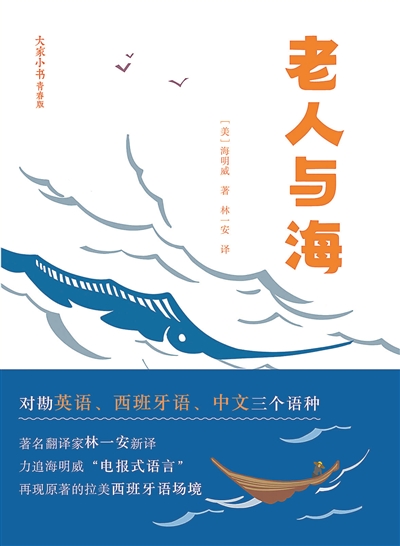
Gao Lizhi respects people who have a harsh attitude in translation work. "These people are naturally suitable for translation, such as Teacher Lin Yian." Gao Lizhi and Lin Yi ‘an jointly published "The Old Man and the Sea", which is a masterpiece of his.
In order to make The Old Man and the Sea, Gao Lizhi compared the English version with several excellent Chinese versions. He used to think "The Old Man and the Sea" was relatively simple, but by comparison, he found that it was really not the case. "A close reading of the text will reveal a lot of vague things. This book was written by Hemingway in Cuba, and the prototype is also an old Cuban fisherman. In order to accurately reflect the situation, Hemingway’s writing has incorporated a large number of local Spanish into English, so there will be many problems if translation is based solely on English. " Lin Yian was awarded the title of Senior Translator by the China Translation Association. He was first a senior Spanish translator and came from a family of customs officers. His English was good since he was a child, and he has been studying Latin American literature.
Hemingway’s masterpiece The Old Man and the Sea is generally characterized as the expression of American spirit, but Gao Lizhi learned from Lin Yi ‘an that The Old Man and the Sea reflects a kind of Latin American revolutionary spirit. Gao Lizhi recalled: "When he told me this, my mind immediately reflected the photo of Hemingway and Castro. Hemingway is undoubtedly inclined to the left. He participated in the Spanish Civil War, so Lin Yian said that "The Old Man and the Sea" is an epic of the Latin American revolution, and I think it is basically established. "
Some of Lin Yi ‘an’s translations were not used to by Gao Lizhi at first. For example, the "old man and child" in the first paragraph is translated as "old man and young man". In his concept, "The old man and the sea" is the image of an old man and a teenager. For this reason, he consulted a lot of materials and finally came to the same conclusion as Lin Yian: it was a young man of about twenty years old who was with the old man, not a weak child.
Many other translations translate the third-person animal into "it", which Gao Lizhi thinks is against Hemingway’s style. "Because Hemingway’s description of animals in the original text is’ He’, I think Hemingway wants to show the intimate companionship between man and nature. He doesn’t want people to divide each other too much in nature, so his names for old people, birds and fish are all personalized. If translated into’ It’, this layer of meaning will be lost."
Lin Yi ‘an has precise self-discipline in translation: the sentence should not exceed 20 words as far as possible. "This also corresponds to Hemingway’s telegraph language, which is the distinctive style of Lin Yi ‘an’s translation, but most of our translations have no style pursuit, and some are even the result of Chinese rewriting." Gao Lizhi said, "The early important Chinese versions of The Old Man and the Sea included those of Zhang Ailing, Yu Guangzhong, Hai Guan and Zhao Shaowei. Later, Mr. Wu Lao’s translation was the most widely read, because Shanghai Translation Publishing House bought Hemingway’s copyright. After Hemingway’s public version, the translation will fly all over the sky. "
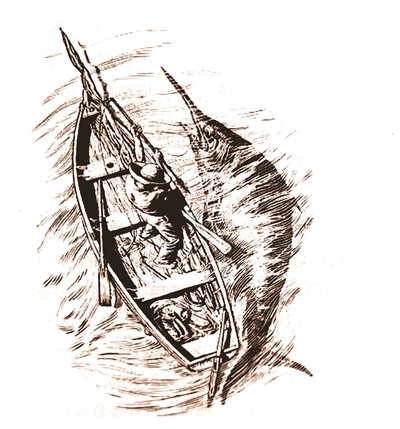
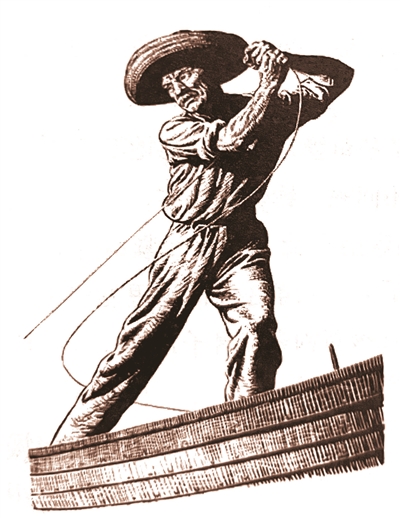
Gao Lizhi’s pride in Lin Yi ‘an’s edition of The Old Man and the Sea lies in that it reflects his own editing thoughts. "The text of" The Old Man and the Sea "is very short, 30,000 to 40,000 words, which many editors are unwilling to touch. Because the profit margin is thin, it is difficult to hold up a book with few words. " Gao Lizhi said, "The old man and the sea on the market is strictly a selection of Hemingway’s short stories or a bilingual form, but this edition I made is clean, that is, the Chinese text and illustrations of the old man and the sea."
The illustrators are Raymond Shepard and Charles Tunicliffe, two famous illustrators, who made beautiful and exquisite illustrations for The Old Man and the Sea, published in 1953 by the Reprinting Society of London. "excellent!" Gao Lizhi commented. The illustrations in the Chinese version of Lin Yi ‘an’s edition of The Old Man and the Sea are all from this edition, but now they are only partially selected. "If conditions permit, I want to get all the original pictures in the future." Gao Lizhi said.
Accidents in the Birth of Children’s History of China
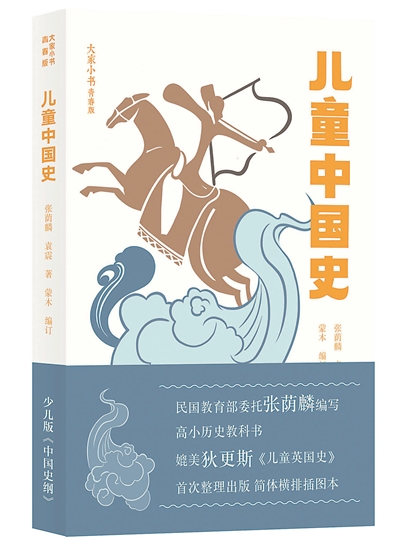
"Everyone’s Little Book Youth Edition" also contains a book "Children’s History of China", signed by Zhang Yinlin and Yuan Zhen, which is also Gao Lizhi’s masterpiece. The process of writing this little book is really unexpected.
Zhang Yinlin, a graduate of Stanford University, is especially valued by Liang Qichao and Chen Yinque. He went abroad to study philosophy, and later studied sociology, which was called doing nothing. However, he said that his future ambition is still history, and learning philosophy is to obtain a way to transcend the world; Studying sociology is to learn how to understand social evolution. Such a person with a clear overall pattern is the reason why Gao Lizhi values his works.
Initially, Gao Lizhi bought a set of Complete Works of Zhang Yinlin, including A History of Children’s China, with only a few thin pages. "I used to read Mr. Zhang Yinlin’s Outline of China History, which was introduced in the preface. This is a middle school textbook commissioned by the Ministry of Education of the Republic of China. I didn’t expect him to have a primary school textbook. " In the preface, Zhang Yinlin mentioned how to popularize the history of China. He thought that our history from primary school to university was from three emperors and five emperors to now, which was a waste of energy, so we should compile teaching materials suitable for students at all stages. "His idea is that high school students should understand the general context of historical evolution, while children should know some heroes."
Gao Lizhi read Zhang Yinlin’s History of Children’s China carefully, and felt that "he used a kind of" Historical Records "written by one person to reflect an era, which has a sense of closeness, good language and great atmosphere".
People who make books are always contemplating topics, and Gao Lizhi intuitively thinks that A History of Children’s China can be a book. He noticed that Zhang Yinlin’s part lacked several figures in the Northern Song Dynasty, which can be compiled through his own "History of the Two Song Dynasties". But what about the part written by Yuan Zhen and Yang Liansheng? When he was worried, Mr. Xi Zhi brought him good news. When he compiled the Chronicle of Wu Han, he sorted out several articles written by Mrs. Yuan Zhen of Wu Han, and thought it should be compiled into the Collection of Lost Articles in Wu Han. Gao Lizhi thinks, "It would be very good if Yuan Zhen’s works of Song Dynasty were added. But who is the author? Zhang Yinlin made it clear in the preface that Yuan Zhen wrote the Southern Song Dynasty and the Ming Dynasty, and Yang Liansheng wrote the Ming and Qing Dynasties. "
However, Mr. Xi Zhi thinks that although the article was signed by Yuan Zhen, it may have been written by Wu Han. Gao Lizhi ruled out this possibility after careful analysis. He thought that Yuan Zhen was unmarried at that time, and Zhang Yinlin, as her brother, could not help but understand her physical condition. If Yuan Zhen’s body did not support her to write a book, Zhang Yinlin could not force her to do it. In addition, it is written by Yuan Zhen, unlike Wu Han, such as Yu Qian. Comparing this article with Yu Qian written by Wu Han, there is nothing in common, and even some important points are different. Therefore, he decisively included Yuan Zhenwen in The History of Children’s China, and signed it by Zhang Yinlin and Yuan Zhenzhu.
To Gao Lizhi’s regret, Mr. Yang Liansheng’s articles from Qing Dynasty to Anti-Japanese War have never been found. He searched everywhere for the National Library and Peking University Library, but they all disappeared. "There is no evidence to show where Mr. Yang’s article is. I think it may have been lost. After all, it was a time of war. "
It’s more important to make a book in a down-to-earth manner than to be a graceful person.
As a book writer, Gao Lizhi doesn’t like recommending books. He thinks it is a kind of degeneration. "Reading should be active. Why should others recommend it?"
When the "Everyone’s Little Books" were completed in 100 kinds, some people suggested that the bibliography was deep and shallow. Can we do reading stratification? This incident really puzzled Gao Lizhi for a year. "I don’t know how to divide it, such as" A Summary of Poetry Metric ",is it shallow or deep? I think people who learn to write old poems must read them, and students may also read them. But like me, I’m born flat and incomplete, just like reading a heavenly book, so I don’t want to read it. " Gao Lizhi, who was confused, was rescued by Professor Chen Pingyuan’s words. "Professor Chen opposes reading stratification, because reading is a person taking the initiative to find a book to read when considering a problem. Isn’t stratification depriving people of their right to think?"
Gao Lizhi also asked students to read the adaptation carefully. For example, he said, "When my son was in the third grade, the school asked him to read The Romance of the Three Kingdoms. I didn’t know how to read all the words in the third grade, so I bought him a children’s edition with pinyin. Later, I found that people didn’t read it at all. I’m surprised. The Romance of the Three Kingdoms is so beautiful. Why not read it? When I turn it over, it comes up with Taoyuan Sanjieyi. All the boldness at the beginning of the original book is lost, and the most essential part is lost, only a few stories are drawn. In fact, the child’s comprehension ability is very strong. If he finds it difficult to understand, he will not read it. The development of reading habits objectively requires a lot of reading, but it must be a relatively independent choice. "
Gao Lizhi especially likes the writer Shi Tiesheng, and thinks that he is a rare writer who thinks deeply in an impetuous society. "I can’t overestimate him, but every day I endlessly ponder over the spirit and awards, but I say that great creation is unimaginable. I think it’s nothing but cheating."
Wang Zengqi also likes it and thinks it is a rare writer who always keeps purity. He consciously was greatly influenced by Mr. Wang, and recalled the scene when Wang Zengqi came to give a lecture when he first entered the Chinese Department of Peking University in 1992. "Mr. Wang’s eyes don’t look at people. He stares at the ceiling with his big eyes up, ignoring everyone for a long time, and then begins to speak with his hometown accent: Someone asked me how to become a writer? I think the first is to skip class. Stop and think, and say, the second is to skip class. Why can’t I stay in The National SouthWest Associated University? It is because Mr. Zhu Ziqing thinks that I always skip classes … I want to read books, but I don’t want to read books. My favorite is my teacher, Shen Congwen. I like Chekhov and Azorin, who read them repeatedly. I don’t like Tolstoy, so I won’t read it. "
When he is particularly bored, Gao Lizhi is willing to read a few pages of classic books and feel calmer. He opposes all kinds of inspirational books, and he doesn’t like most of the online articles, which will only make him more impetuous. "Good language is hard to come by, with natural ingredients. Shen Congwen and Xiao Hong have good languages, and their languages are not disciplined. Language is a spiritual thing, full of selfish distractions, and it is also selfish distractions. " This is Gao Lizhi’s summary.
Wang Ning, a scholar, once put forward ardent hopes for "Everyone’s Little Book" and hoped that its own language would become a norm. Gao Lizhi has been observing: "We have published several books about Chinese characters." He has always stressed that reading the original classics is necessary for academic popularization. Although he is not a blind admirer of philosophy of language, he believes that language is the ultimate node of all cultures. "China’s greatest invention is definitely not paper and compass, but Chinese characters. Chinese characters maintain the Chinese language and culture circle, which is the most basic thing to carry the traditional culture of China. "
The publishing industry has encountered a series of difficulties, how to adapt? Gao Lizhi believes that it is the wisdom of leaders, not editors, that is tested in the environment of the times. He often encourages his editors: culture needs to be spread at any time, so the creativity of editors is always needed. "The real test of editors in the future is the aesthetic quality. Because of the change of communication form, the luxury of books is irreversible, and judging whether a content value is worth a paper book will be the first test of editors’ judgment. "
Gao Lizhi also knows that many things are difficult to do. After many years of writing books, he often thinks: humility benefits, full of losses, learning to listen is more important than learning the language, and doing books in a down-to-earth manner is more important than being a graceful person.
Text/reporter Wang Wei
Photo courtesy/Fang Yi