Which air conditioner has better quality, Gree or Midea? Comparing the three aspects, the result is clear at a glance.

Air conditioning is a necessary household appliance in summer, and various brands of air conditioners on the market are dazzling. Among them, Gree and Midea are two giants in the domestic air-conditioning field, with high sales volume and market share, and they are also one of the first choice brands in the minds of many people when choosing air conditioners.

So, which air conditioner is better in quality, Gree or Midea? Objectively speaking, air conditioning is a product with very mature technology, and the differences in technology, materials and functions are not obvious on the surface, but there are still obvious differences in the quality performance of air conditioning during long-term use and under various harsh conditions.

Which air conditioner has better quality, Gree or Midea? From the following three aspects, the results are clear at a glance!

Brand strength

Gree is a leader in the domestic air-conditioning industry, focusing on the air-conditioning sector, engaging in differentiation (enhancing added value), with strong research and development capabilities and innovative spirit, excellent product technical performance and high-end brand image, which is deeply trusted by consumers.

Gree air-conditioning takes quality as its life, does not cut corners, has solid materials, strict quality control and durable and reliable products. Gree also owns Zhuhai Lingda compressor independently researched and developed, which is the only air-conditioning enterprise in China with the core technology of compressor.

Midea is a domestic comprehensive development-oriented home appliance enterprise, with complete products, and all kinds of home appliances are ranked in the top, which can occupy a large market share in various fields.

Midea air conditioner is famous for its high cost performance, good product aesthetics, high product innovation and relatively close to the people. Midea has also been committed to the progress of compressors, using gmcc compressors or purchasing Haili, Sanyo and other compressors.

Technical strength

Gree and Midea air conditioners have their own characteristics and advantages in technology.

Gree air-conditioning has performed well in refrigeration and heating capacity, stability, noise control and energy saving efficiency. Gree air-conditioning has a number of patented technologies, such as constant temperature heating, cold outside machine, moving large air deflector, photosensitive sensing and so on. Gree also launched an intelligent cloud platform "Gree+",which can remotely control air conditioners through mobile phones.

Midea’s air conditioners also perform well in intelligent control, self-cleaning function and comfortable air supply. Midea air conditioner has the functions of multi-dimensional cleaning system, ECO energy-saving mode, wide-angle air supply, and direct blowing prevention.

Midea has also launched an intelligent platform "Mercure", which can control air conditioners through mobile phones or voice.

Price–performance ratio

As the two most powerful domestic air-conditioning brands, Gree and Midea have their own advantages in quality. For example, the details of Gree air conditioning are well done, and the cooling copper tube will be slightly thicker than 0.03 cm, which increases the cost, not only improving the heat exchange efficiency, but also enhancing the corrosion resistance.

Take Yunjia series, one of the best-selling models of Gree air-conditioning, as an example, the monthly sales volume of the big 1P hanging machine exceeds 10,000 units, and the applicable area is 10 ~ 15m2. This air conditioner has reached the new first-class energy efficiency standard, and its energy efficiency ratio (APF) is as high as 5.28, with excellent energy-saving performance. Built-in triple energy-saving control technology, refrigerant flow control+temperature and humidity control+comfort control, achieving a balance between energy saving and comfort.

This air conditioner adopts Haili compressor, double-row heat exchanger and electronic expansion valve, which improves the heat exchange efficiency and makes the refrigeration heat up quickly. At the same time, the mute effect is also very good, with 7-speed wind speed optional and 4-speed sleep mode to meet the needs of different life scenes.

This air conditioner also has a detachable air outlet design, plus Gree’s innovative 56C bacteria-cleaning and self-cleaning technology, which makes cleaning and care convenient and quick. But also provides a 10-year warranty service, so that users can use it more safely.

Midea air conditioner is famous for its high cost performance, good product aesthetics, high product innovation and relatively close to the people. Midea’s air conditioner used in low-end machines is indeed worse, mainly reflected in the thickness of ABS inner machine shell and galvanized steel plate of outer machine, but it does not affect the normal service life and firmness.

Midea Fengku New Level Energy Efficiency Variable Frequency Air Conditioning is one of the best-selling models of Midea Air Conditioning. Its price is several hundred yuan cheaper than Gree Yunjia, and its cost performance is high. This air conditioner has also reached the new first-class energy efficiency standard, with an energy efficiency ratio (APF) of 5.27 and a simple and elegant design.

Using full DC frequency conversion system, combined with high-frequency rapid cooling and heating technology, the cooling and heating effect is also very good. The 60-second cooling air outlet reaches 34.5 degrees, and the 30-second cooling air outlet reaches 18 degrees. The built-in intelligent clean high-temperature steam washing function is very cost-effective.

Which air conditioner has better quality, Gree or Midea? From the comparison of the above three aspects, Gree and Midea air conditioners have their own advantages, and there is no absolute good or bad. If you pursue quality and technology and don’t mind the higher price, you can choose Gree air conditioner. If you pursue cost performance and innovation and don’t care much about details, you can choose beautiful air conditioners.

Finally, remind everyone that air conditioners need to be cleaned regularly, especially those that have not been used for a long time. It is recommended to clean them thoroughly before opening them. It is very simple to use a special air-conditioning cleaner. Just spray the foam of the cleaner on the air-conditioning radiator and let it stand for 15 minutes, then turn on the air conditioner and let it automatically cycle and clean, thus eliminating the complicated disassembly and cleaning process.

Professional air-conditioning cleaning agent has the ability to produce rich and delicate foam, which can thoroughly remove the dirt in the gap of radiator without dripping water. After use, wipe off the excess foam and stains with a cloth, and the heat sink will be brand-new.

After use, the cooling effect of the air conditioner has been obviously improved, and the air has become much fresher. I feel that my health has also been guaranteed.

It is not enough to only pay attention to the cleaning of air-conditioning filter screen, because the heat sink is the place to shelter evil people and shelter evil practices! Therefore, cleaning agents must be used to clean the heat sink to ensure the safe use of air conditioners.

Source: Sina News

It is very likely that the men’s three big balls will be absent from the Olympic Games collectively, so we must talk about this lesion

January 12th, 2020, this day is worth remembering for China sports.

When I woke up, the men’s volleyball team and the Olympic Games lost to their opponents in the competition for the qualification of the Tokyo Olympic Games, and both said goodbye to Tokyo.
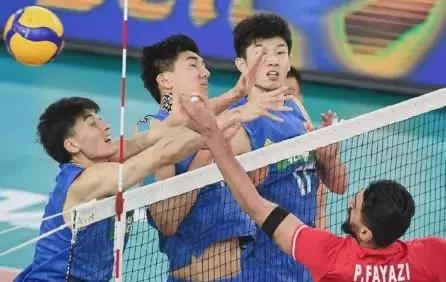
Coupled with the China men’s basketball team, which missed the direct promotion in the World Cup and had little chance of the play-offs, it is almost certain that China’s men’s three major balls will be absent from the Olympic Games for the first time in 36 years.

Slowly hit a question mark, which is almost the state of everyone who hears the news; Leaving a string of ellipsis silently has become the mentality that many fans are accustomed to such news.

The collective loneliness of the three big balls can not help but make people look at the professional development of our sports again.

The problem of professionalism cannot be hidden.

Back in time, 40 years ago, competitive sports was still a national affair, and athletes were paid wages and allowances. In that era, sports had little to do with money, and sports left us more inspiration and emotion.
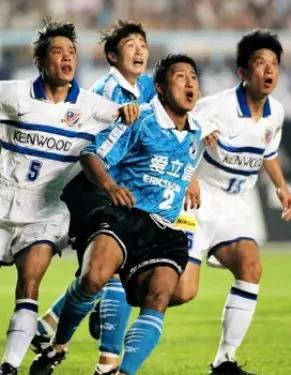
In 1994, we finally made up our mind to build a professional football league of our own. After New Year’s Day that year, 25-year-old Fan Zhiyi got his first monthly salary after becoming a "professional player" — — 2500 yuan. For ordinary people with a monthly salary of two or three hundred at that time, this is definitely an "astronomical figure."

In 2019, the China Football Association issued a "salary limit order", stipulating that contracts signed by domestic players after November 20, 2019 are new contracts, and the pre-tax maximum salary does not exceed 10 million RMB, indicating that the Football Association has "can’t stand" the high salary of players.

From the past, the income was close to ten times that of ordinary people, and now I don’t know how many times it is. The professionalization of football brings players a lot of money, but it brings more inner "fragmentation" to fans.

When we don’t have much money, our football level can still "gallop across Asia" and enter a World Cup. Why is it that when we have money, the road to professionalism has taken so long, but it is hard to win?

Although achievement is not the only thing in competitive sports, it is the most intuitive KPI to observe the development of professionalism. It is not accidental that the men’s three big balls collectively "failed" the Olympic Games, but it is a concentrated manifestation of the inherent problems of China’s sports professionalization over the years.

Professionalization is not simple imitation and excessive commercialization.

In the development of sports professionalization, European and American countries and regions are well-deserved "leaders". For example, the development of professional leagues in the United States is relatively successful, and the "four major leagues" have strong influence all over the world. The contribution of professional sports to its economic and social development far exceeds the scope of sports.

For big ball sports, the objective requirements of high intensity and strong confrontation are not ruled out, but these "congenital factor theories" are more like an excuse in the face of the fact that Japanese and Korean players are blooming in the five major leagues of European football, which makes Lei Wu "wandering" alone in Spain even more sad.

Looking back on the road that sports professional leagues have traveled for so many years, we will more or less see the shadow of mature leagues in Europe and America. It is necessary to learn advanced, but the road of sports professionalization can’t be copied successfully by copying and pasting. It looks like it is unprepared. It is doomed to fail only by working hard on fur and packaging, and it can’t walk out of its own professional road by imitating regardless of differences.

In fact, some of our leagues are almost the same as mature leagues in form. We have everything in the regular season and playoffs, and awards such as top scorer and MVP have been awarded, but we have neglected the virtuous circle of a series of more important factors behind these mature professional leagues, such as advanced concepts, supporting models, social interaction and talent training.
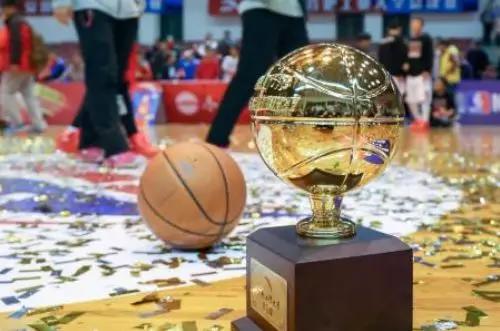
In addition, some people’s understanding of professional leagues is too simple, and they equate professionalism with commercialization, thinking that "investment is in place, players are rich, the market is booming, and advertisements are placed" is professionalism.

As a result, commercialization has replaced professionalism. Everything is about money, and everything is about profit. As a result, professionalism has been stumped by impetuousness and chaos, supervision and morality have lost their position, and scandals such as match-fixing, black whistle and corruption are common. Such professionalism has failed to promote the level of competition.

A hurdle that must be overcome

Furthermore, before going professional, we took the national system, so although we can win gold and silver in the Olympic Games, the gold medals we won are basically "minority events" with insufficient popularization.

However, to build a sports power, it is not only supported by harvesting gold medals in "minority events", but also must occupy a place in popular and world-wide competitive events such as "Three Big Balls". The development of such projects depends only on competition, and we have no choice but to develop professionalism.

After the pilot of football professionalization, basketball and volleyball leagues have also begun. The league is made up of clubs, but most of the clubs at that time were born out of sports teams, and they were not really professional clubs. Such "congenital deficiency" clubs should not only serve the market, but also obey the administration, and even sacrifice for the Olympic Games and the National Games strategy. Even in the context of the separation of government and enterprise and the separation of management and operation, professional leagues are not so professional.

Some people think that sports are competitive sports when they talk about it. When they talk about competitive sports, they simply equate it with the Olympic Games, and link the level of competitive sports with the Olympic gold medal. They think that the Olympics is everything, and the league serves the Olympic training. Simple thinking and gold medal worship can’t make China’s sports really strong, on the contrary, it makes China’s sports professionalization lack international vision more and more.

Under the influence of this concept, the core question of professional development, "What is the purpose of sports professionalization and whether professional leagues should be led by the market or the administration", has not been answered. The goal and direction of development are not clear, and it is common for sports professionalization reform to appear repeatedly.

The reform is bound to be painful, but once some projects experience retrogression, the previous reforms will be limited, thus returning to the old road of market sidelining and administrative command "chasing gold and winning silver", and the deep-seated reform of professionalization cannot be smoothly promoted, which is also a hurdle that must be crossed on the road of sports professionalization in China.
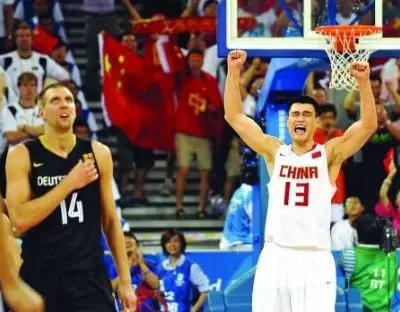
In fact, over the years of professionalization, we have gained world-class athletes like Yao Ming and Li Na, but we should think more about how their "golden period" came about. If we don’t understand the truth, there will be many twists and turns on the road of sports professionalization in China.

108 toll stations and 4 service areas in Guizhou Province were temporarily controlled due to the epidemic situation.

  Cctv newsAccording to the website of Guizhou Provincial Department of Transportation on September 12, at present, the situation of epidemic prevention and control in China is severe and complicated, and the epidemic situation in Guizhou Province is sporadic and locally aggregated. Guizhou’s transportation system resolutely implements the decision-making arrangements of the CPC Central Committee, the State Council, the provincial party committee, the provincial government and the Ministry of Transport on epidemic prevention and control, and the vast number of transportation cadres and workers work together to fight the epidemic and overcome the difficulties together, fully ensuring smooth logistics and passenger service on the premise of ensuring epidemic prevention and control, and promoting the stability of the industrial chain supply chain. In order to better serve the transportation and logistics under the current epidemic prevention and control situation, the relevant matters are suggested as follows:

  First, the province’s highway control situation

  As of 10: 00 on September 12, 2022, there were 108 toll stations and 4 service areas under the temporary control of the epidemic (according to the epidemic prevention and control policy in the epidemic-affected areas). The distribution is as follows:

  (1) Guiyang area (56)

  Two-way control stations: Guiyang East Station, Qinqi Station, Huaxi Station, Shibanshao Station, Niulangguan Station, University Town Station, Tongmuling Station, Mengguan Station, Economic Development Station, Gui ‘an Station, Yanlou Station, Linka Station, Guiyang South Station, Qingyan Station, Tianhetan Station, Comprehensive Insurance Station, Wudang Station, Dingba Station, Yongle Station, Shuitian Station and Yangchang Station. Gaoxin Station, Guiyang West Station, Guanshanhu West Station, Qingzhen Station, Libo Station, Qibo Station, Maige Station, Dongfenghu Station, Wangzhuang Station, Aluminum City Station, Acropolis Station, Maoyun Station, Xifeng Station, Kaiyang East Station, Miping Station, Kaiyang North Station, Nanmudu Station, Kaiyang West Station, Kaiyang South Station, Shili Gallery Station, Sanyuan Station, etc.

  (2) Zunyi area (34)

  Entrance Control Stations: majiawan Station, Nanbai Station, Sanhe Station, Wujiang Station, Shiban Station, Qijiang Station, Sancha Station, Shangyu Station, Longping Station, Horn Station, Tuanxi Station, Chang ‘an Station, Tiechang Station, Zunyi South Station, Zunyi Station, Zunyi North Station, Hailongtun Station, Guanba Station, Yaxi Station and Horseshoe Station.

  (3) Anshun area (2)

  Two-way control station: Xia Yun Station.

  Export Control Station: Pingba Station.

  (4) Bijie area (10)

  Two-way control stations: Zhijin Station, Zhijin East Station, Zhijin North Station, Zhijindong West Station, Zhuzang Station, Heitu Station, Zhijindong South Station, racecourse station Station, Puweng Station and Yina Station.

  (5) Qiannan region (6)

  Two-way control station: Panjiang Station.

  Export control stations: Guiding South Station, Longli Station, Longli East Station, Longli West Station and Guang Shun North Station.

  (6) Control of service areas

  By 10: 00 on September 12, 2022, Zhijin Service Area (two-way) and Shangbao Service Area (two-way) 2 temporarily controlled the service area.

  The above traffic control information is updated at 10: 00 am and 17: 00 pm every day and published in the "Traffic Travel" column on the homepage of the "Guizhou Provincial Department of Transportation" portal and the "Guizhou 12328" WeChat applet, or you can call the traffic service supervision hotline 12328 to get the latest traffic trends.

  Second, the hotline service telephone

  Traffic and transportation service supervision hotline 12328: mainly accepts consultation and complaints and suggestions on logistics, passenger service, freight service and road network traffic. Among them, the key 12328-4 is dedicated to handling complaints and appeals related to logistics security.

  Government service hotline 12345: mainly accepts public consultation, complaints and suggestions such as travel policies for epidemic prevention and control.