Cultural differences are like mirrors. If you want to make progress, you need to look in the mirror.

The office of Gao Lizhi, deputy editor-in-chief of Beijing Publishing House, is no different from what I imagined. The books are full, staggered and stacked. To my surprise, he can find the books he needs accurately and casually, and then take them out like a few treasures.

The series "Everyone’s Little Books" occupies several floors of his bookcase and has a wide variety. This is the fist product of Beijing Publishing House. It was selected as the first book recommended by the former State Administration of Press, Publication, Radio, Film and Television to popularize Chinese excellent traditional culture. Its editorial purpose is to encourage everyone to write small books, so that the common sense of various disciplines becomes the starting point of our thinking.

Each book of the series is about 100,000 words in length, in order to make readers gain more knowledge in a short time. Yuan Xingpei, a famous scholar, said in the preface of the series: The so-called "everyone" has two meanings. First, the author of the book is everyone; Second, the book is for everyone to read. "Everyone’s little books" are small in size: readers can put them in their pockets and take them out anytime and anywhere to read a few pages.

Gao Lizhi is the main planner of this series. On the occasion of the publication of 200 series, Gao Lizhi also launched the "Youth Edition of Everyone’s Little Books". In an interview, he said: "In 2020, the Ministry of Education announced the recommended reading list for primary and secondary education, and a large number of’ Little Books for Everyone’ were selected. I just want to take this opportunity to bring out what is suitable for students to read and contribute to education in China. This is the original intention of making the’ Little Books for Everyone Youth Edition’."

Talking with Gao Lizhi can deeply feel his wit and wisdom. Making books is his occupation and also his hobby. His idea of writing books is integrated into his humor, which can support him to talk endlessly, and his words are full of "real money".

Reading, getting started is very harmful.

Gao Lizhi’s ambition to be a "small book for everyone" is to open up the academic context since the introduction of western learning to the East in the 20th century. He believes that the best parts of human culture must be convergent, while the differences are like mirrors. "If you want to make progress, you need to look at yourself in the mirror, which is also the root of philosophy. Before understanding this mirror, we must recognize and respect differences. Cultural heritage knows no national boundaries. It is yours to inherit, and it will never be yours if it is not inherited. " This is Gao Lizhi’s idea.

At present, there are more than 200 kinds of books, and Gao Lizhi consciously embraces and accommodates the ideas, hoping to provide a system for the public, because only by understanding the system can we know how "traditional culture came step by step".

"Everyone’s Little Book" is a book written by professional people for the general public, that is, academic popularization. Many authors of bibliographies are scholars in the Republic of China. In the Republic of China, everyone generally received Chinese and western education, and they knew how to speak to ordinary readers, which was particularly important in Gao Lizhi’s view. He said: "In the Republic of China, these people didn’t have a very detailed concept of discipline in their growing environment. Most of them were nurtured and grown up in traditional culture, which was difficult for future generations to achieve after the accomplishment of Chinese studies. They have generally received western education, and it is of great benefit to look back on our culture with western ideas as a mirror. Therefore, they are generally good at writing and writing beautifully, which is of course suitable for popularization. "

Many authors of contemporary "Everyone’s Little Books" are also admired by Gao Lizhi. The common feature of these authors is Excellence. "Like Teacher Liu Beicheng, we gave him a manuscript. His revised manuscript can fill every space, and the words are still very correct, which can be known by the typesetting staff."

There is a tendency of "everyone’s short books", and the lower the reading target is, the more cross-border it is, and the better the book sales. For example, Mr. Fei Xiaotong’s China in the Country is a must-read for all disciplines of literature, history and philosophy. However, for example, A Brief Discussion on Exegetics and An Introduction to Dunhuang Studies, the authors are everyone, and relatively few people care about them, but Gao Lizhi thinks they are also necessary for everyone’s short books.

To be a "everyone’s little book" with inheritance and ability, Gao Lizhi emphasized not only the concept of "everyone", but also the definition of "folk science" and real experts. "We should take a rigorous attitude towards traditional culture and excellent western culture." And this rigorous attitude, in Gao Lizhi’s mind, is the threshold for version selection and reading. "I don’t deny that although many’ everyone’s little books’ are based on popularity, they all have reading thresholds. I feel that reading is unwilling to overcome difficulties, not to mention the promotion of traditional culture. " It is absurd for Gao Lizhi to talk about Zuo Zhuan by reading a Selected Stories of Zuo Zhuan, and to comment on Confucius’ thoughts by reading a Selected Translation of The Analects, so he thinks it is urgent to popularize the knowledge of edition science.

Gao Lizhi often visits parks and second-hand bookstores. Once I saw a pirated book stall in the park, an old lady was asking the stall owner if he had The Analects. The stall owner handed over a large and thick copy of The Complete Works of The Analects. The old lady looked at it for a long time and said, "So the Analects looks like this?" The stall owner replied, "There is only one Analects, and there is no other Analects." So the old lady bought it, saying it was for her grandson.

Gao Lizhi rated such a mistake as "getting started incorrectly is very harmful". "This piece of ancient books, especially poetry, is really the hardest hit." This is what Gao Lizhi felt for a long time, so after he went to Beijing Publishing House, he immediately put Mr. Lai Xinxia’s Brief Introduction to Classical Bibliography into the "Little Book for Everyone". It is necessary to choose books, know a little about bibliography and edition, and see the author, collator, translator, publisher and even responsible editor. If it is still difficult to distinguish, you can read the author’s profile. "If the author is in management, he interprets Laozi from the perspective of management, and this reader is also in management, so it is right to buy it; And if what you want to know is the basic literature or the history of thought, it is obviously not appropriate to buy it. "

Making books, dislike "quick finished products"

Before writing a book, Gao Lizhi was a media person. While working in the news section of Jiangsu Wuxi Daily, he always wanted to make something that would last longer. "I feel that books are longer than newspapers, so I transferred to the publishing industry in 2003." In his view, publishing and media are interlinked, and the technical means and ideas of publishing editors are generally the same as those of news editors.

Gao Lizhi once paid great attention to bestsellers and found that there must be some social trend of thought behind super bestsellers, just like news from the beginning. The publishing industry is a strange field, the most obvious performance is that having good ideas may not make money. "In whose hand a book finally falls, and in whose hand it comes out, the form is completely different, and books have the fate of books. But there is another saying: it is better to plant trees than to pick mushrooms. Whether the books are finally sent to the people who need them, that is to say, how much sales are, I can’t say that the most creative products are often not as profitable as follow-up products. "

Having seen too many booksellers "dead" on the bestseller road, Gao Lizhi understands that what he should really pursue is long-term sales. In the publishing industry, authors with traffic have absolute advantages, and publishers also need certain brands and traffic. As far as Gao Lizhi knows, many famous book publishers are losing money. In many cases, the editing power of a high-quality book is not weaker than that of the author, which is a comprehensive work. Han Jingqun, editor-in-chief of October Literature and Art Publishing House, agrees with Gao Lizhi: the authors write what they can write and the editors edit what we can. It stands to reason that the author is an intellectual producer and the publisher is only a disseminator, but highlighting a certain aspect of the work to make it suitable for the market reflects the wisdom of the editor. For the real sense of accomplishment of publishing editors, Gao Lizhi summed up three things: leading a certain tendency in the industry; Discover important authors; Make books that others can’t make.

Gao Lizhi is disgusted with making fast-paced products. He thinks that books such as "reading world history in three minutes" are ridiculous. He vomits: "Why do you need so many historians to read world history in three minutes?" For a while, there was a dispute over picture books, and then picture books became hot. Gao Lizhi felt that it was not the right way at the beginning. He believes that images and words bring people different imaginations, and in a sense, concretization limits imagination, but imagination is indispensable no matter where one wants to develop.

Translation emphasizes the translator’s style and self-discipline.

To do anything, you need to have an international perspective. The consensus of Gao Lizhi and his colleagues is that while understanding China’s traditional culture, we need to refer to western culture. Therefore, he presided over the opening of a series of "Everyone’s Little Books" translation houses.

For the translation, Gao Lizhi emphasizes the translator, and pays attention to the version. He attaches great importance to the old translators who have only translated one book in their lifetime. "After thorough study, his translation is a research product." Gao Lizhi always thinks that translation is first and foremost a matter of attitude. "When we review the translated manuscript, there are basically problems in all the places that we can’t read, which is caused by the translator’s hard translation in some places."

Gao Lizhi respects people who have a harsh attitude in translation work. "These people are naturally suitable for translation, such as Teacher Lin Yian." Gao Lizhi and Lin Yi ‘an jointly published "The Old Man and the Sea", which is a masterpiece of his.

In order to make The Old Man and the Sea, Gao Lizhi compared the English version with several excellent Chinese versions. He used to think "The Old Man and the Sea" was relatively simple, but by comparison, he found that it was really not the case. "A close reading of the text will reveal a lot of vague things. This book was written by Hemingway in Cuba, and the prototype is also an old Cuban fisherman. In order to accurately reflect the situation, Hemingway’s writing has incorporated a large number of local Spanish into English, so there will be many problems if translation is based solely on English. " Lin Yian was awarded the title of Senior Translator by the China Translation Association. He was first a senior Spanish translator and came from a family of customs officers. His English was good since he was a child, and he has been studying Latin American literature.

Hemingway’s masterpiece The Old Man and the Sea is generally characterized as the expression of American spirit, but Gao Lizhi learned from Lin Yi ‘an that The Old Man and the Sea reflects a kind of Latin American revolutionary spirit. Gao Lizhi recalled: "When he told me this, my mind immediately reflected the photo of Hemingway and Castro. Hemingway is undoubtedly inclined to the left. He participated in the Spanish Civil War, so Lin Yian said that "The Old Man and the Sea" is an epic of the Latin American revolution, and I think it is basically established. "

Some of Lin Yi ‘an’s translations were not used to by Gao Lizhi at first. For example, the "old man and child" in the first paragraph is translated as "old man and young man". In his concept, "The old man and the sea" is the image of an old man and a teenager. For this reason, he consulted a lot of materials and finally came to the same conclusion as Lin Yian: it was a young man of about twenty years old who was with the old man, not a weak child.

Many other translations translate the third-person animal into "it", which Gao Lizhi thinks is against Hemingway’s style. "Because Hemingway’s description of animals in the original text is’ He’, I think Hemingway wants to show the intimate companionship between man and nature. He doesn’t want people to divide each other too much in nature, so his names for old people, birds and fish are all personalized. If translated into’ It’, this layer of meaning will be lost."

Lin Yi ‘an has precise self-discipline in translation: the sentence should not exceed 20 words as far as possible. "This also corresponds to Hemingway’s telegraph language, which is the distinctive style of Lin Yi ‘an’s translation, but most of our translations have no style pursuit, and some are even the result of Chinese rewriting." Gao Lizhi said, "The early important Chinese versions of The Old Man and the Sea included those of Zhang Ailing, Yu Guangzhong, Hai Guan and Zhao Shaowei. Later, Mr. Wu Lao’s translation was the most widely read, because Shanghai Translation Publishing House bought Hemingway’s copyright. After Hemingway’s public version, the translation will fly all over the sky. "

Gao Lizhi’s pride in Lin Yi ‘an’s edition of The Old Man and the Sea lies in that it reflects his own editing thoughts. "The text of" The Old Man and the Sea "is very short, 30,000 to 40,000 words, which many editors are unwilling to touch. Because the profit margin is thin, it is difficult to hold up a book with few words. " Gao Lizhi said, "The old man and the sea on the market is strictly a selection of Hemingway’s short stories or a bilingual form, but this edition I made is clean, that is, the Chinese text and illustrations of the old man and the sea."

The illustrators are Raymond Shepard and Charles Tunicliffe, two famous illustrators, who made beautiful and exquisite illustrations for The Old Man and the Sea, published in 1953 by the Reprinting Society of London. "excellent!" Gao Lizhi commented. The illustrations in the Chinese version of Lin Yi ‘an’s edition of The Old Man and the Sea are all from this edition, but now they are only partially selected. "If conditions permit, I want to get all the original pictures in the future." Gao Lizhi said.

Accidents in the Birth of Children’s History of China

"Everyone’s Little Book Youth Edition" also contains a book "Children’s History of China", signed by Zhang Yinlin and Yuan Zhen, which is also Gao Lizhi’s masterpiece. The process of writing this little book is really unexpected.

Zhang Yinlin, a graduate of Stanford University, is especially valued by Liang Qichao and Chen Yinque. He went abroad to study philosophy, and later studied sociology, which was called doing nothing. However, he said that his future ambition is still history, and learning philosophy is to obtain a way to transcend the world; Studying sociology is to learn how to understand social evolution. Such a person with a clear overall pattern is the reason why Gao Lizhi values his works.

Initially, Gao Lizhi bought a set of Complete Works of Zhang Yinlin, including A History of Children’s China, with only a few thin pages. "I used to read Mr. Zhang Yinlin’s Outline of China History, which was introduced in the preface. This is a middle school textbook commissioned by the Ministry of Education of the Republic of China. I didn’t expect him to have a primary school textbook. " In the preface, Zhang Yinlin mentioned how to popularize the history of China. He thought that our history from primary school to university was from three emperors and five emperors to now, which was a waste of energy, so we should compile teaching materials suitable for students at all stages. "His idea is that high school students should understand the general context of historical evolution, while children should know some heroes."

Gao Lizhi read Zhang Yinlin’s History of Children’s China carefully, and felt that "he used a kind of" Historical Records "written by one person to reflect an era, which has a sense of closeness, good language and great atmosphere".

People who make books are always contemplating topics, and Gao Lizhi intuitively thinks that A History of Children’s China can be a book. He noticed that Zhang Yinlin’s part lacked several figures in the Northern Song Dynasty, which can be compiled through his own "History of the Two Song Dynasties". But what about the part written by Yuan Zhen and Yang Liansheng? When he was worried, Mr. Xi Zhi brought him good news. When he compiled the Chronicle of Wu Han, he sorted out several articles written by Mrs. Yuan Zhen of Wu Han, and thought it should be compiled into the Collection of Lost Articles in Wu Han. Gao Lizhi thinks, "It would be very good if Yuan Zhen’s works of Song Dynasty were added. But who is the author? Zhang Yinlin made it clear in the preface that Yuan Zhen wrote the Southern Song Dynasty and the Ming Dynasty, and Yang Liansheng wrote the Ming and Qing Dynasties. "

However, Mr. Xi Zhi thinks that although the article was signed by Yuan Zhen, it may have been written by Wu Han. Gao Lizhi ruled out this possibility after careful analysis. He thought that Yuan Zhen was unmarried at that time, and Zhang Yinlin, as her brother, could not help but understand her physical condition. If Yuan Zhen’s body did not support her to write a book, Zhang Yinlin could not force her to do it. In addition, it is written by Yuan Zhen, unlike Wu Han, such as Yu Qian. Comparing this article with Yu Qian written by Wu Han, there is nothing in common, and even some important points are different. Therefore, he decisively included Yuan Zhenwen in The History of Children’s China, and signed it by Zhang Yinlin and Yuan Zhenzhu.

To Gao Lizhi’s regret, Mr. Yang Liansheng’s articles from Qing Dynasty to Anti-Japanese War have never been found. He searched everywhere for the National Library and Peking University Library, but they all disappeared. "There is no evidence to show where Mr. Yang’s article is. I think it may have been lost. After all, it was a time of war. "

It’s more important to make a book in a down-to-earth manner than to be a graceful person.

As a book writer, Gao Lizhi doesn’t like recommending books. He thinks it is a kind of degeneration. "Reading should be active. Why should others recommend it?"

When the "Everyone’s Little Books" were completed in 100 kinds, some people suggested that the bibliography was deep and shallow. Can we do reading stratification? This incident really puzzled Gao Lizhi for a year. "I don’t know how to divide it, such as" A Summary of Poetry Metric ",is it shallow or deep? I think people who learn to write old poems must read them, and students may also read them. But like me, I’m born flat and incomplete, just like reading a heavenly book, so I don’t want to read it. " Gao Lizhi, who was confused, was rescued by Professor Chen Pingyuan’s words. "Professor Chen opposes reading stratification, because reading is a person taking the initiative to find a book to read when considering a problem. Isn’t stratification depriving people of their right to think?"

Gao Lizhi also asked students to read the adaptation carefully. For example, he said, "When my son was in the third grade, the school asked him to read The Romance of the Three Kingdoms. I didn’t know how to read all the words in the third grade, so I bought him a children’s edition with pinyin. Later, I found that people didn’t read it at all. I’m surprised. The Romance of the Three Kingdoms is so beautiful. Why not read it? When I turn it over, it comes up with Taoyuan Sanjieyi. All the boldness at the beginning of the original book is lost, and the most essential part is lost, only a few stories are drawn. In fact, the child’s comprehension ability is very strong. If he finds it difficult to understand, he will not read it. The development of reading habits objectively requires a lot of reading, but it must be a relatively independent choice. "

Gao Lizhi especially likes the writer Shi Tiesheng, and thinks that he is a rare writer who thinks deeply in an impetuous society. "I can’t overestimate him, but every day I endlessly ponder over the spirit and awards, but I say that great creation is unimaginable. I think it’s nothing but cheating."

Wang Zengqi also likes it and thinks it is a rare writer who always keeps purity. He consciously was greatly influenced by Mr. Wang, and recalled the scene when Wang Zengqi came to give a lecture when he first entered the Chinese Department of Peking University in 1992. "Mr. Wang’s eyes don’t look at people. He stares at the ceiling with his big eyes up, ignoring everyone for a long time, and then begins to speak with his hometown accent: Someone asked me how to become a writer? I think the first is to skip class. Stop and think, and say, the second is to skip class. Why can’t I stay in The National SouthWest Associated University? It is because Mr. Zhu Ziqing thinks that I always skip classes … I want to read books, but I don’t want to read books. My favorite is my teacher, Shen Congwen. I like Chekhov and Azorin, who read them repeatedly. I don’t like Tolstoy, so I won’t read it. "

When he is particularly bored, Gao Lizhi is willing to read a few pages of classic books and feel calmer. He opposes all kinds of inspirational books, and he doesn’t like most of the online articles, which will only make him more impetuous. "Good language is hard to come by, with natural ingredients. Shen Congwen and Xiao Hong have good languages, and their languages are not disciplined. Language is a spiritual thing, full of selfish distractions, and it is also selfish distractions. " This is Gao Lizhi’s summary.

Wang Ning, a scholar, once put forward ardent hopes for "Everyone’s Little Book" and hoped that its own language would become a norm. Gao Lizhi has been observing: "We have published several books about Chinese characters." He has always stressed that reading the original classics is necessary for academic popularization. Although he is not a blind admirer of philosophy of language, he believes that language is the ultimate node of all cultures. "China’s greatest invention is definitely not paper and compass, but Chinese characters. Chinese characters maintain the Chinese language and culture circle, which is the most basic thing to carry the traditional culture of China. "

The publishing industry has encountered a series of difficulties, how to adapt? Gao Lizhi believes that it is the wisdom of leaders, not editors, that is tested in the environment of the times. He often encourages his editors: culture needs to be spread at any time, so the creativity of editors is always needed. "The real test of editors in the future is the aesthetic quality. Because of the change of communication form, the luxury of books is irreversible, and judging whether a content value is worth a paper book will be the first test of editors’ judgment. "

Gao Lizhi also knows that many things are difficult to do. After many years of writing books, he often thinks: humility benefits, full of losses, learning to listen is more important than learning the language, and doing books in a down-to-earth manner is more important than being a graceful person.

Text/reporter Wang Wei

Photo courtesy/Fang Yi

Reporting/feedback

"Crossing the Wire" subverts itself, and Lu Han, who steps in and stands, is starting again


1905 movie network feature A year ago, we wrote a manuscript, "Laughing at Lu Han is the real tragedy of the year". At that time, the manuscript wrote: Failure does not mean that Lu Han should really be laughed at by the crowd. This film should be a warning that we allow failure, and failure is for future progress.


After the manuscript was sent out, various comments emerged in the background, some supporting their favorite beans, and some continuing to "black". Without a doubt, traffic largely represents controversy. As a representative of traffic, Lu Han’s every move will be noticed by the public. In the past year, in addition to publishing music works, he has participated in the recording of "Creation Camp 2020", and rarely participated in other film and television works. He is still surrounded by countless fans, and at the same time, many people are singing bad news.


Until the online drama "Crossing the Wire" went live, the comments about him, whether on Weibo and Zhihu, or on Hupu and Douban, formed a "epic" praise front. 


This time, maybe we can re-establish ourselves in the context of our work and talk about Luhan as an actor. 


Luhan is no longer exquisite.

At the beginning of the first episode of "Crossfire," we almost didn’t recognize Lu Han on the screen. With short instant noodle hair, a baggy T-shirt, fat pants, and flip-flops, he looked like a gamer. 


In this drama, he is no longer the shining idol image we used to know in front of the camera. He does not maintain the expression management of an idol at all times, nor does he have a Korean filter, but the audience is very comfortable watching. Lu Han said in an interview with "Shanghai Fortress" that I am learning about the word actor step by step, and I especially want to deeply study the acting aspect, because I am also gradually transforming, hoping to use my own actions to work hard to get more people’s recognition step by step. 


When the movie was released, his overly delicate and handsome appearance was constantly complained, and many viewers who did not buy it believed that his thick bangs did not match the role setting of the officer and lacked the toughness that should be there. 


Now, at least from the initial impression in "Crossfire", it can be seen that Lu Han and the entire team are really determined to transform. Of course, pretending to be ugly can never prove his acting skills, it can only be said that he has taken the first step. 


In the sixth episode of the series, Lu Han made his most emotional appearance as an actor. In order to comply with his parents’ arrangement and make his job regular as soon as possible, he kept changing drinks for the leader at the wine table. After three rounds of drinking, he returned home, sitting decadently on the ground, facing the dilemma of reality and dream. 


Sighing, bowing his head, and Lu Han’s habitual licking of his lips. This string of movements is placed here, directly conveying the helplessness and confusion of this character to the audience in a layered manner. Director Xu Hongyu mentioned in an interview that during the filming of this scene, Lu Han did not rely on drinking alcohol to find feelings, but actually performed it.

Let’s watch another scene. He was also full of enthusiasm. After running errands to buy KFC for the leader, he was finally thrown away by the other party. At this time, the camera still gave Xiao Feng a close-up – the same sigh and bow, but the emotion given was no longer helplessness, but the helplessness of "social animals" and the grievance of not daring to be angry. 


Let’s take a look at a group of the same scene and compare the states in different atmospheres. At the beginning, Xiao Feng temporarily put down his dream and stood at the door of the unit to pull his tie. It was a kind of helpless but had to be passively accepted. 


After this short period of work, he resigned decisively at the staff meeting, choosing to ignore the eyes and pressure of the world and resume his e-sports dream. Even at this time, he did not have any team members around him, but the youthful high spirits returned to him again. 


From these key scenes, Lu Han really grasped the different emotional states of Xiao Feng’s character. Overall, he still retained some habitual movements during the performance, but in this drama, these movements no longer seemed inconsistent, but could make people easily enter the play. This time, Lu Han did improve. 

Just a comfort zone?

On the Internet, they saw a lot of negative opinions. They thought that Lu Han had performed well this time, largely because Xiao Feng’s character was close to him. In other words, Xiao Feng was Lu Han performing in his comfort zone.


Looking back at his previous works, when he starred in and, many people said that the characters in these two works are similar, and they are more compatible with Lu Han himself, and there is not much personality arc, so it is not too difficult. 


So can these characters be hastily considered as Luhan in their comfort zone?

We don’t know, and I believe that no one except himself would dare to make such a positive conclusion. When Lu Han met the director Xu Hongyu for the first time, the first question he asked the other party was, "Do I want to play Lu Xiaobei?" Because in his opinion, this role is very similar to him and has a sense of security. This result was rejected by the director, but at that time he did not know whether the teenager in front of him could play the role of Xiao Feng well. 


For all the people behind "Crossfire", they were very sure that casting the star, who was a huge controversy in his acting at the time, in the role meant risks. Because before this, Lu Han’s first series "The Book of Choice" had just faced the double fire of word-of-mouth and business. During the filming of this drama, Lu Han chose to hand himself over to the director. During the five months of filming of the film, he hardly left the crew. He talked to the director every day to find the feeling of Xiao Feng. They started with the details of their lives, and wiped all the traces of the "idol Lu Han" in the eyes of everyone. 

Therefore, in "Crossing the Line of Fire", we can see a state of Luhan that we have never seen before, not playing handsome or deliberate, but really turning ourselves into Xiao Feng in the drama. There is a sentence on the poster of the characters in the drama, "In Crossing the Line of Fire, what do you want to leave behind?" Perhaps for Luhan, it is also a question that he should seriously consider as an actor. 


He once said in an interview, "I don’t think it’s possible to like everyone, as long as you work hard 100%, or 200%, or you feel that you have a breakthrough. Because it’s impossible to get everyone’s recognition, maybe some people’s doubts will become the driving force for your progress. I hope everyone can see my progress." This sentence just responded to the question on the poster. What he wanted to keep was his acting skills and everyone’s recognition. 

Transformation, stand up

In just 5 years from "Return to 20" to the present, the audience has witnessed every step of Lu Han. This year, Lu Han just turned 30 and officially entered his thirties. He knows very well that it is not just traffic that really needs to stand firm in this entertainment industry. Obviously, he has slowed down his progress because of this. 


He is facing his own transformation. On Lu Han’s Weibo certification, he says "actor, singer," but few people other than fans are willing to use "actor" to define his identity. 


While reconstructing his identity as an "actor" to the outside world with his actions, he is slowly making a transformation. He understands that he cannot always appear in film and television works as an idol or a teenager, and the same appearance will not bring recognition to everyone. As he said, "I am learning about the word actor step by step, and I especially want to deeply study the aspect of acting, because I am also gradually transforming, hoping to use my actions to work hard to get more people’s recognition step by step."

When everyone thought he could only play a certain type of role, he once said that he especially wanted to play the villain. Perhaps compared to the role of Xiao Feng in "Crossing the Wire", the villain will become his biggest challenge. And in the work "Doom" to be broadcast, he will try the villain role of Sven scum for the first time. 


For the audience, it will be another kind of expectation. Admittedly, at the end of this article, we are not trying to brag about how good Lu Han’s acting skills are, but objectively speaking, in "Crossing the Wire", he has obviously made qualitative progress. The public often looks at this group of stars with the colored lens of "traffic".

They may still be some distance away from the name of actors, but as for whether their acting skills are good or bad, whether they have improved or regressed, is the content worthy of public discussion. The concept put forward by Xu Hongyu during the creation of "Crossfire", "game life", is not a state of bottoming out immediately, but a process of exploration. This process requires time, recognition, and questioning, not pure denial.

As Gala’s performance of "Dreams of Innocence" sings in the latest episode, "Run forward/Face the cold eyes and ridicule/The vastness of life can’t feel without suffering/Fate can’t make us kneel and beg for mercy/Even if the blood is spilled in the arms."


Peng Lianghao, deputy mayor of Jurong, Jiangsu Province, fell off the horse. Details: Before being arrested, he was on the pitch of the South University School of Management.

Things seem a little sudden.

At 4: 30 pm on May 8, 2015, Peng Lianghao, vice mayor of jurong city, made an appointment with Ren Ding (a pseudonym), president of Nanjing University, at a tennis court near the exit of Jurong City on Shanghai-Nanjing Expressway. But it’s not playing ball.
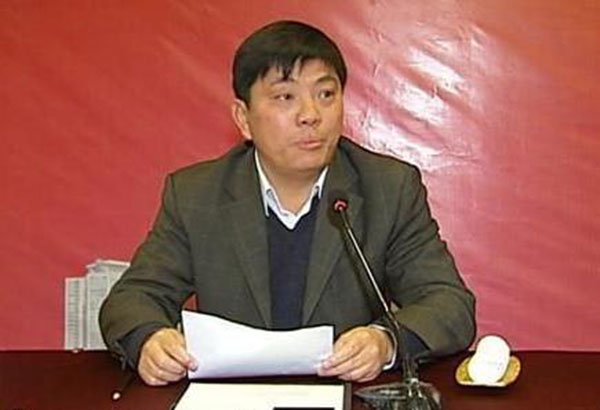
Peng lianghao

Unlike the usual meeting, Peng Lianghao looked a little nervous. He told Sting Ren that if anyone investigates his daughter’s going to college, it should be in accordance with the agreed terms.

A few hours later, Peng Lianghao was taken away by the procuratorate.

What the procuratorate wants to talk to him is far more than the fact that his daughter goes to school. The vice mayor of jurong city, who had been in charge of planning approval and engineering construction for a long time, came to an abrupt end on this day.

From May 24 to June 17, 2016, after four days of trial, the case is about to enter the sentencing period.

Recently, The Paper (www.thepaper.cn) learned the above details according to the relevant materials of Peng Lianghao’s case. With the public hearing of this case, more details about Peng Lianghao’s bribery case have gradually surfaced.

"lightning falls"

On the day of being taken away, Peng Lianghao also attended a public event in Jurong normally, which can be described as "lightning falling".

According to public reports, on May 8, 2015, jurong city Industry and Commerce, Quality Inspection and Food and Drug Administration were formally merged and listed, and jurong city Market Supervision Administration was established. Jurong Mayor Xu Wen and Vice Mayor Peng Lianghao attended the inaugural meeting and unveiled it.

Jurong is a county-level city managed by Zhenjiang City, Jiangsu Province. As the southeast gateway of Nanjing, Jurong is known as "the new eastern suburb of Nanjing and the Royal Garden of Jinling".

Peng Lianghao is a cadre who grew up in Jurong. According to public information, Peng Lianghao graduated from Shenyang Institute of Civil Engineering and Architecture, and worked in the planning and urban construction of Jurong for a long time.

In 2001, Peng Lianghao became the deputy director of jurong city Construction Bureau, in 2004, he was transferred to the planning director of jurong city, and in 2007, he became the deputy mayor of jurong city until he was dismissed.

As a deputy mayor, Peng Lianghao was mainly in charge of tourism bureau, health bureau and education bureau before his fall. Before that, Peng Lianghao had been in charge of urban and rural planning, housing and urban and rural construction for a long time.

The Paper reporter noted that Peng Lianghao was directly taken away by Zhenjiang City Procuratorate that day, and did not pass the usual "pre-processing" procedure of Zhenjiang City Commission for Discipline Inspection.

Pulled out by another vice mayor
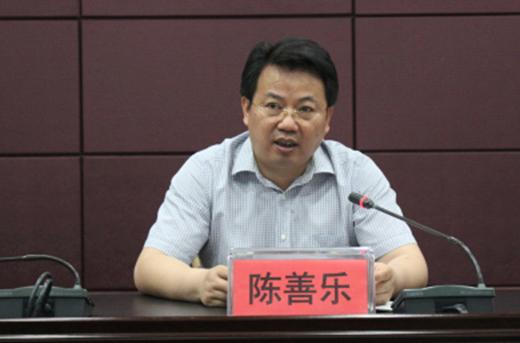
Chen shanle

Although Peng Lianghao is a "lightning horse", the outside world seems very sudden, but in fact there are signs.

On January 4th, 2015, Chen Shanle, then vice mayor of jurong city, was put on file for investigation on suspicion of accepting bribes. According to the relevant materials of the Anti-Corruption Bureau of Zhenjiang Procuratorate about Peng Lianghao’s case, it was in the process of checking a briber in Chen Shanle’s bribery case on April 24, 2015 that Zhenjiang People’s Procuratorate accidentally discovered that Peng Lianghao, the deputy mayor of jurong city, was also suspected of a major crime and accepted bribes from him many times.

At the same time, the prosecution also found that Peng Lianghao was also suspected of taking bribes of RMB 1 million in the process of his female "trick" entering Nanjing University.

Two weeks later, Zhenjiang City Procuratorate officially filed a case against Peng Lianghao for suspected bribery.

According to the relevant materials of Peng Lianghao’s case, Ren Ding, the person involved and director of Nanjing University, confessed that Peng Lianghao called Sting Ren at four o’clock in the afternoon when he was taken away, and asked him to meet him at the tennis center in front of the exit of Jurong City on Shanghai-Nanjing Expressway for about 20 minutes.

Peng Lianghao told Sting Ren that a boss had an accident in Jurong recently, and several city leaders were very nervous.

1 million "Nanda point recruitment fee"

Peng Lianghao specifically mentioned his daughter’s "little trick" to go to school in Nantah. "He reminded me again that his daughter’s recruitment to Nantah should be in accordance with the agreed statement." Sting Ren said.

The so-called "point-and-click" means that as long as the score of the college entrance examination reaches a line, as long as there are some outstanding experts such as the school board, and a certain "point-and-click fee" is paid, a candidate will be guaranteed to enter a famous school.

According to Peng Lianghao’s account to the procuratorate, her daughter took the college entrance examination in June 2012, and her score reached one line. After that, she successfully entered Nantah through the recommended quota of Sting Ren, and Gao Mouyun, a local real estate owner in Jurong, paid a "point recruitment fee" of 1 million yuan for her, and directly paid the money to Sting Ren.

Peng Lianghao met Sting Ren at a dinner organized by Yang Ju, then head of Jurong City Investment Company.

In May 2013, Yang Ju was taken away for investigation. In order not to affect himself, Peng Lianghao called Gao Mouyun, the chairman of the developer, home and told him. If anyone asks, he said that the 1 million yuan that Gao Mouyun called Sting Ren was borrowed from Gao Mouyun by Yang Ju.

When he went to the prison to see Yang Ju, Peng Lianghao told Yang Ju that the money that Yang Ju owed Gao Mouyun had been paid back. "This is to unify the caliber with Yang Ju and cope with possible investigations." Peng Lianghao confessed.

One of Peng Lianghao’s immediate family members told The Paper that according to his understanding, Peng knew that he had to pay 1 million yuan, but he never received a notice to pay the money. It was not until after Yang cited it in 2013 that he realized that the money had already been paid by Gao Mouyun, so he was very nervous at that time.

Accused of "eating all the developers"
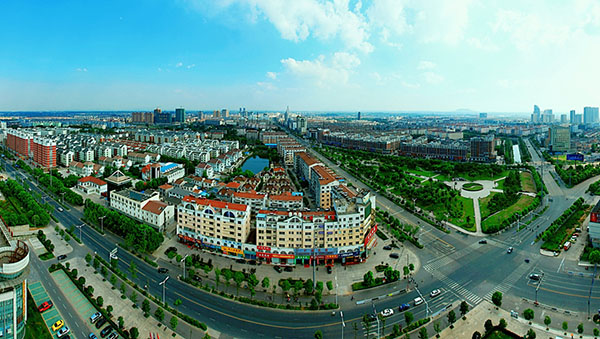
Jurong

Although Jurong is a county-level town in the south of the Yangtze River, it is close to Nanjing, the provincial capital. In recent years, urban construction projects have blossomed everywhere.

As an official who has been deeply involved in Jurong urban construction and planning, Peng Lianghao was accused of accepting bribes from several developers. According to the prosecution’s allegations, Peng Lianghao accepted bribes from 25 developers or builders, large and small, totaling over 10 million yuan.

According to the prosecution’s allegations, from the end of 2005 to January 2013, Peng Lianghao illegally accepted RMB 2,403,500 from Fang Moufu, the chairman of a tourism development company in Jiangsu, nine times, providing assistance for the planning approval of some projects of the company where Fang Moufu worked. From 2003 to 2012, Peng Lianghao received 1.47 million yuan in cash and gift cards from Gao Mouyun, the project contractor, for 13 times to help Gao Mouyun undertake the hydropower installation project.

During the construction of a residential area, Peng Lianghao even personally came forward to coordinate the demolition work of several nail households.

"In this regard, we are grateful to Peng Lianghao. He did not deliberately set a threshold for us in the planning plan we reported." Li, the person in charge of the contractor of the community, explained that since then, they have adjusted the plot ratio of the community, and the construction area has increased by about 20,000 square meters, so that they can earn more than 30 million yuan. "With Peng Lianghao’s concern, the floor area ratio adjustment was successfully approved." Li said.

According to the investigation by the prosecution, from 2010 to 2013, Li paid bribes to Peng Lianghao four times, totaling 190,000 yuan.

There is also a religious figure in Jurong, Yang, who paid a bribe of 50,000 yuan to Peng Lianghao in order to thank him for his help in the renovation of the top palace of Maoshan Daoyuan.

According to the religious personage, at first he prepared 100,000 yuan, but Peng Lianghao refused to accept it anyway. "I told him that this is the money to receive wealth, and it must be collected, so he took half." The source said.

The Paper reporter noted that among the 25 developers or builders who paid bribes, more than 20 were the chairmen or general managers of various construction and real estate development companies in Jurong. Many reasons for bribery are to provide convenience for project planning and approval, not to be difficult, and to do a good job in daily relations.

The responsible person of jurong city Urban Construction Bureau confessed that,As the deputy mayor in charge of urban construction and planning, Peng Lianghao holds the power of life and death. The implementation of a project must finally be signed by the deputy mayor in charge. For major and special projects, the deputy mayor in charge may ask the secretary and mayor for instructions, but in the end, the deputy mayor in charge will sign the approval..

"self-evaluation"

Peng Lianghao’s place to receive property is mainly the government office.

According to the prosecution’s allegations, the briber Wang paid a total of 750,000 yuan for 11 times, and 10 times he sent the money in a paper bag to Peng Lianghao’s deputy mayor’s office. The briber Lei paid a total of 750,000 yuan for 8 times, all of which happened in Peng Lianghao’s office.

These bribers are familiar people, but they are not "iron buddies".

Peng Lianghao’s residence (home) is another major place for bribery. The prosecution said that Gao Mouyun, a developer friend whom Peng Lianghao had known for many years, paid bribes 12 times in Peng Lianghao’s home. Of Peng Lianghao’s tens of millions of assets, five million were placed in a developer who was familiar with him, and more than five million were placed in his younger brother.

In May 2015,Peng Lianghao made a self-evaluation when he was tried. He said that he was in a hot post and had rejected the temptation of many possessions. "If I let go, it will not be a problem to charge six or seven hundred thousand yuan a year for the Spring Festival and Mid-Autumn Festival."

Peng Lianghao said that he had no special hobbies, didn’t take a shower outside, didn’t have a driver’s license, never drove alone for more than 10 years, had no valuables at home, had an average decoration grade, and didn’t speculate in real estate. However, in terms of collecting cash, "I can’t help myself. I have collected huge bribes for many years. Since I filed an investigation, I have learned from a painful experience and only tried to make a complete me."

Like many officials under investigation, Peng Lianghao did not plead guilty quickly. According to the relevant materials of Peng Lianghao’s case, during the examination, Peng Lianghao did not "tell the whole story" about his behavior, but also had some struggles.

In July 2015, Peng Lianghao once confessed that all the criminal facts he had previously confessed were false. "I have never taken any money from others." He changed his mind and said that the assets at home were normal. At the same time, he also accused the procuratorate of "extorting a confession from him", which led him to be forced to account for taking bribes of more than 10 million.

The old man drowned

In the bribery list, Peng Lianghao once accepted four bribes totaling 420,000 yuan from Ding Moshun, the head of an architectural design company in Jurong, all in Peng Lianghao’s municipal government office.

Unlike ordinary developers, Ding Moshun previously served as the deputy director of jurong city Planning Bureau, and was an old subordinate of Peng Lianghao.

In 2009, Ding resigned from the Planning Bureau and set up a design company. At first, he was mainly engaged in architectural design, and three years later, his business scope was increased by planning and design.

According to Ding Moshun, in the planning and architectural design process of a resettlement housing project, Ding Moshun once looked for Peng Lianghao, hoping to do these businesses. Finally, Ding Moshun also successfully won the business.

Ding Moshun confessed that during the three years from 2011 to 2013, Ding Moshun went to the office of Vice Mayor Peng Lianghao three times and sent a total of 400,000 yuan in cash.

Surprisingly, after accepting the investigation by the prosecution and explaining the bribery, Ding Moshun drowned.

The Paper reporter learned from many insiders that Ding Moshun drowned in Gexian Lake, a famous scenic spot in Jurong, in the early morning of October 10, 2015, and was found at 6: 00 the next morning.

There is no relevant public report on Ding Moshun’s death. Two people familiar with the relationship with Ding Moshun told the The Paper reporter that more than a month before his death, Ding Moshun had told them angrily that he blamed himself for Peng Lianghao’s case and "wanted to stand up and sacrifice himself".

Two people familiar with the matter said that they didn’t care at the time, but I didn’t expect Ding Moshun to really die.

The Paper has not confirmed that Ding Moshun’s death is related to Peng Lianghao’s case or Zhenjiang City Procuratorate. However, according to the materials of Peng Lianghao’s case, on the afternoon of October 10th and 11th, that is, shortly after Ding Moshun’s death, a member of Zhenjiang CPPCC and a representative of Zhenjiang Municipal People’s Congress, who had been questioned by prosecutors before, were once again called in for questioning.

The testimony of the two witnesses is roughly the same as the previous two, but in the last part of the transcript, two questions were added.

One question is, was the process of questioning you by the procuratorate standardized? Both witnesses gave a positive answer.

Another question is, did you strictly abide by the time limit for questioning witnesses during the inquiry?

Both witnesses replied that they had not been questioned for more than 12 hours. After discussing the problem clearly within a few hours, they signed it and went back without delaying the work and life of the witnesses.

Suddenly "postponed the trial"
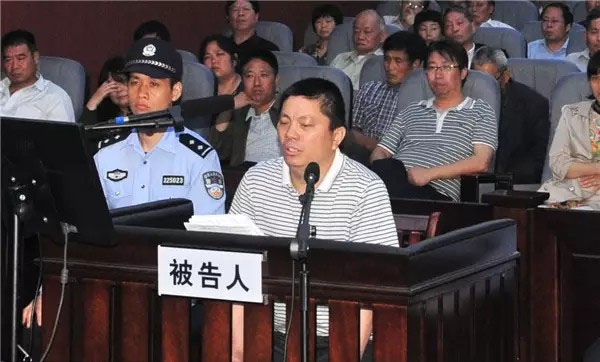
Peng Lianghao’s bribery trial site. Oriental IC data

On June 17, 2016, Peng Lianghao’s bribery case was heard by Zhenjiang Intermediate People’s Court for the last time. Previously, the case was heard on May 24th, May 25th and June 8th of the same year.

The indictment of Zhenjiang People’s Procuratorate alleges that from 1999 to 2014, Peng Lianghao took advantage of his position as deputy director of jurong city Construction Bureau, director of Planning Bureau and deputy mayor of jurong city Municipal People’s Government to seek benefits for others in planning approval, project undertaking and project payment, and illegally accepted other people’s property totaling RMB 11,953,500.

Due to the seriousness of the case, the court announced an adjournment after the trial on June 17.

On June 20th this year, Zhenjiang Intermediate People’s Court decided to postpone the trial of the defendant Peng Lianghao’s bribery case.

According to the personnel involved in the trial, Peng Lianghao had made a final statement at the trial site, and according to the process, he "waited for the verdict".

People in the legal profession told The Paper that it is not uncommon for the court to postpone the trial when hearing a case, but it is still rare to postpone the trial on the eve of the final statement made by the defendant. "It may be that the case is extremely complicated, the prosecution may find some flaws or mistakes, or the court may find it extremely difficult." The reason for this is still unknown.